Long periods of sitting, commuting, and repetitive movement can leave the hips feeling restricted and the lower back working harder than it should. A gentle routine of back and hip stretches can help you move more comfortably, maintain flexibility, and interrupt the stiffness that often builds during the day. For lasting relief, explore yoga’s broader health benefits alongside these gentle back and hip stretches.
Yoga-based stretching adds a mindful element to this work. Moving slowly, coordinating each stretch with the breath, and avoiding force can make the routine feel both physically useful and calming. The goal is not to achieve the deepest possible pose. It is to build comfortable, repeatable mobility that supports everyday activities.
Why hip mobility can affect the lower back
The hips and lower back work together during walking, bending, sitting, and lifting. When the hips are tight, the lower back may compensate by moving more than is comfortable. This can contribute to stiffness, limited range of motion, and an increased sense of strain.
Regular mobility work encourages the muscles around the hips, glutes, and lower back to move through a more comfortable range. It can also complement posture-focused movement and gentle strengthening for the core and glutes. A balanced routine is more useful than relying on stretching alone.
A gentle sequence for tight hips and lower back
Move through the following sequence slowly. Stay within a mild to moderate stretch and keep your breathing steady. You can use the full sequence or select two or three movements for a shorter daily reset.
1. Pelvic tilts and Cat-Cow
Begin with gentle spinal movement to warm the lower back. On your back with your knees bent, slowly tilt the pelvis so the lower back moves toward and away from the floor. Alternatively, come onto your hands and knees and move gradually between a rounded spine and a gently extended spine. Keep the motion comfortable rather than trying to reach an extreme position.
2. Supine knee-to-chest
Lie on your back and bring one knee toward your chest, using your hands behind the thigh or over the shin for light support. Keep the other leg in a comfortable position. Switch sides, or bring both knees toward the chest if that feels easy and relaxed. This is a controlled option for moving the lumbar area and works well near the beginning or end of a session.
3. Reclined Figure Four
With both knees bent, place one ankle over the opposite thigh. Keep the crossed foot active and draw the supporting leg toward you only until you feel a manageable stretch through the outer hip and glute. Repeat on the other side. This reclined variation is generally easier to control than a seated or standing hip-opening position. After back and hip stretches, dynamic yoga flows can add strength-building movement that supports sustainable fat loss.
4. Low Lunge
Step one foot forward and lower the opposite knee to the floor, using a folded blanket beneath the knee if needed. Keep your torso upright or support your hands on blocks. Let the pelvis move forward slightly until you feel a stretch at the front of the back-leg hip. Avoid pushing the hips forward aggressively, and change sides after several calm breaths.
5. Child’s Pose
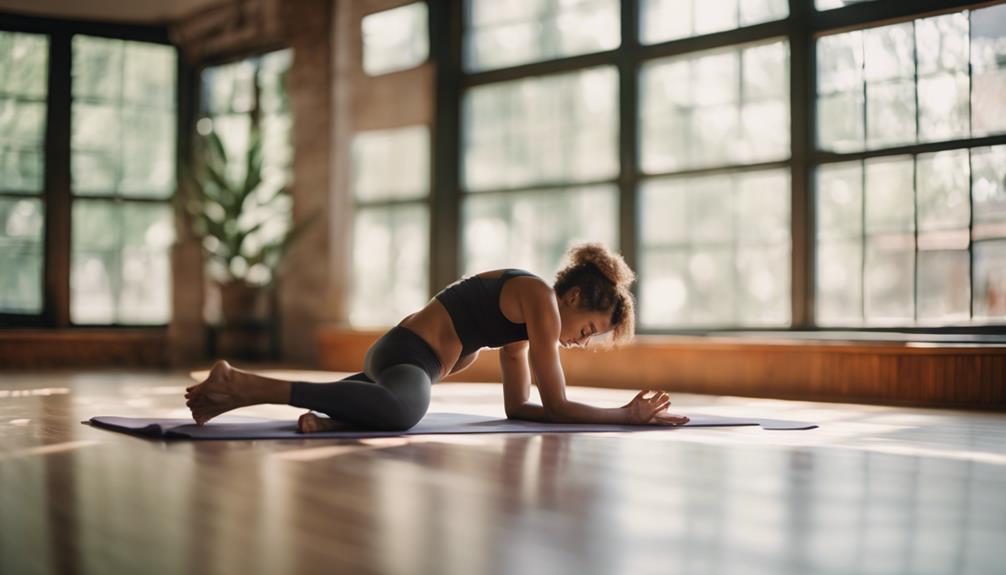
From a kneeling position, sit the hips back toward the heels and fold forward as far as comfortable. The knees may be together or separated. Rest your forehead on the floor, a cushion, or stacked hands. This gentle shape can provide a restful stretch for the back while allowing the breathing to slow.
6. Supported twist or bridge
Finish with a relaxed movement such as a supine twist, keeping the range small and the shoulders comfortable. A supported bridge is another option: lift the hips gently and place a suitable support beneath the pelvis, then allow the body to settle without forcing the position. These closing movements help you transition out of the more active stretches.
How to make the routine safer and more comfortable
- Warm up with gentle movement before spending longer in a stretch.
- Use blankets, bolsters, or blocks to reduce strain and support your position.
- Inhale to create length and space; exhale as you relax into a comfortable range.
- Do not bounce, force, or use momentum to deepen a pose.
- Stop or change the movement if you feel sharp pain, tingling, or pain traveling down the leg.
If Pigeon Pose feels too intense, use Reclined Figure Four instead. A folded blanket beneath the hip can also reduce pressure in hip-opening positions. The most effective variation is one you can perform with steady breathing and without guarding or straining.
Build consistency rather than intensity
Short, regular sessions can be easier to maintain than occasional long practices. Try adding a few stretches in the morning, after sitting for an extended period, or at the end of the day. The legacy guidance suggests practicing a targeted routine three to five times per week, while adjusting the frequency to your comfort and schedule.
Pair mobility work with gentle strengthening for the glutes, core, and posterior chain. Stretching may improve comfort and movement, while strengthening helps support the hips and lower back during daily activities.
When to seek professional advice
Consult a physical therapist or qualified yoga therapist before beginning a new routine if you have had spine surgery, have a diagnosed herniated disc, experience persistent sciatica, or have unexplained numbness or weakness. Professional guidance is also appropriate when stretching repeatedly increases symptoms. An expert can help select suitable modifications and create a progression that respects your individual limitations.