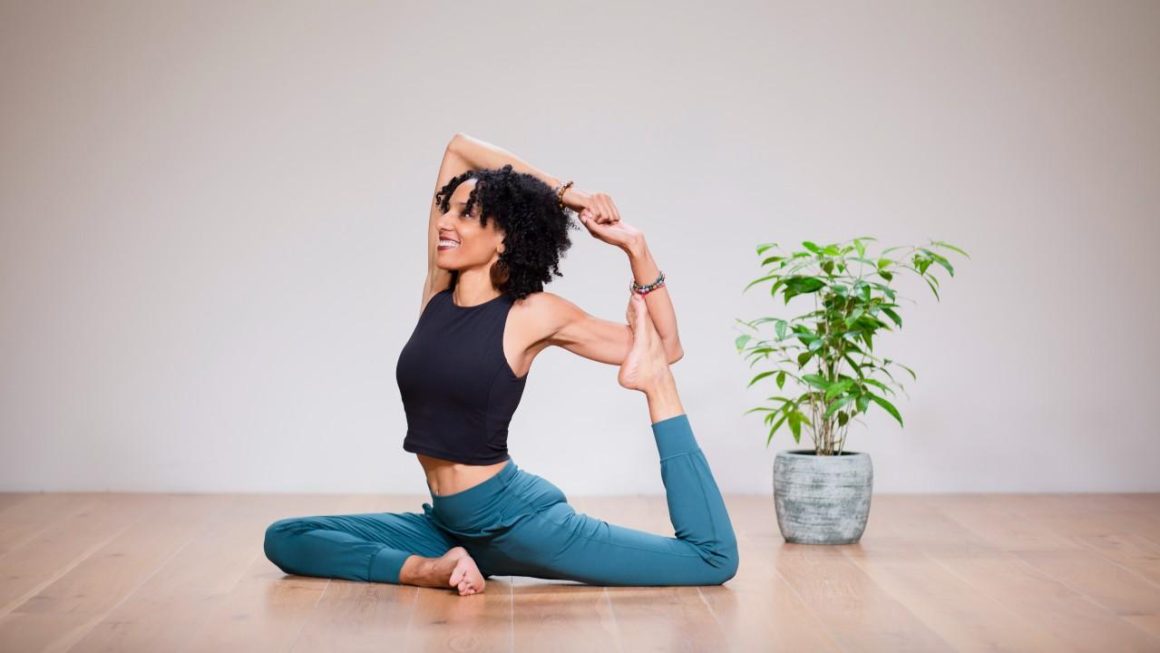
Sculpt classes combine mindful movement with strength training for a workout that challenges your muscles, balance, and endurance. Most sessions draw from yoga, Pilates, and resistance exercise, using light weights, bands, or bodyweight movements alongside controlled flows and stretching.
Because formats vary between studios, one sculpt class may feel like a fast-paced strength workout with yoga-inspired transitions, while another may place more emphasis on alignment, core control, and mobility. Understanding the typical structure can help you decide whether this style of fitness suits your goals.
What is a sculpt class?
A sculpt class usually combines yoga-based movement with high-repetition strength exercises. Sessions may include dumbbells, resistance bands, sliders, or other small props. The focus is generally on controlled movement, muscular endurance, balance, and core engagement rather than lifting very heavy weights.
Unlike a traditional yoga class, which may concentrate more heavily on breathwork, longer-held poses, and flexibility, a sculpt workout normally keeps participants moving through a wider range of strength exercises. The yoga influence remains visible in the attention to posture, alignment, breathing, and smooth transitions between movements.
What happens during a sculpt workout?
Although every instructor has a different teaching style, a typical sculpt exercise class may follow this pattern:
- Warm-up: Dynamic movements gradually raise your heart rate and prepare your joints and muscles.
- Standing strength work: Squats, lunges, arm exercises, and balance-focused sequences may be performed with light weights.
- Core and floor exercises: The class may move to a mat for abdominal, glute, and stability exercises.
- Optional cardio intervals: Some formats add short bursts of faster movement to increase intensity.
- Cool-down: Stretching, slower movement, and focused breathing help bring the session to a close.
Instructors often cue both form and tempo. You may be asked to perform small pulses, isometric holds, or controlled repetitions that make light resistance feel challenging without requiring heavy equipment.
Potential benefits of sculpt fitness classes
Sculpt workouts are designed to develop muscular endurance while incorporating the balance, flexibility, and body awareness associated with yoga-based exercise. Regular participation may help you feel stronger during everyday activities and more confident with movements that require stability and control.
The combination of resistance and continuous movement can also make the class feel more energetic than a conventional yoga session. Depending on the instructor and format, the workout may challenge your cardiovascular endurance as well as your arms, legs, glutes, and core.
Another advantage is adaptability. Beginners can often use lighter weights, reduce the range of motion, or choose a lower-impact variation. More experienced participants may increase resistance or select a more demanding option. A well-led class should make these choices clear rather than expecting everyone to work at the same level.
How to find a sculpt workout near you
When searching for a sculpt workout near you, compare more than the class name. Studios may use labels such as yoga sculpt, sculpt fitness, weights and flow, or sculpt exercise for similar but not identical formats.
Review the class description and look for details about equipment, intensity, duration, and experience level. It is also useful to check:
- Whether the studio offers a drop-in, introductory session, or class package
- What weights or props are provided
- Whether modifications are demonstrated
- How large the classes usually are
- Whether the schedule fits a routine you can maintain
Studio websites, instructor biographies, and participant reviews can provide useful context. If the description is unclear, contact the studio and ask how the class differs from its yoga, Pilates, or traditional strength sessions.
Choosing the right instructor and class style
Look for an instructor who prioritizes alignment, controlled movement, and sensible progression. A good teacher should explain how to adjust the weight or movement when an exercise feels too difficult, and should offer alternatives for common limitations rather than encouraging participants to ignore discomfort.
Consider the atmosphere you prefer as well. Some sculpt classes are upbeat and athletic, with quick transitions and a stronger cardio component. Others are slower and more mindful, placing greater emphasis on breath, precision, and stretching. Neither approach is automatically better; the best choice is the one that matches your fitness goals and keeps you motivated to attend consistently.
Preparing for your first sculpt class
Wear comfortable clothing that allows free movement and bring water. If equipment is not supplied, the studio should tell you what to bring, such as light dumbbells, a resistance band, or a yoga mat. Start conservatively with the weight you choose. Maintaining good form is more important than selecting the heaviest option.
Tell the instructor before class about any injuries, movement restrictions, or concerns. During the session, distinguish between the normal effort of exercise and sharp or worsening pain. Use the available modifications and take short breaks when needed.
Whether you attend a single session or buy a package, a sculpt class can be a practical way to combine strength, mobility, and mindful movement. Compare local formats, try an introductory class when available, and choose an instructor who supports safe, steady progress.