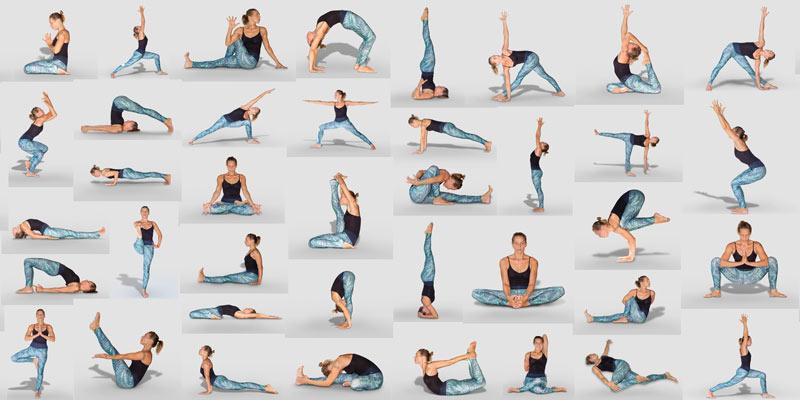

Yoga levels are useful teaching tools, but they should not become rigid labels or rankings. A student’s level is better understood as a combination of skills: how they move, breathe, listen, adapt, and respond to challenge. This broader view helps teachers create classes that are safe, appropriately demanding, and supportive of long-term progress.
What a Yoga Level Really Means
Beginner, intermediate, and advanced are convenient terms, but they do not tell the whole story. Someone new to yoga may have excellent body awareness, while a more experienced practitioner may still be developing stability, breath control, or confidence in transitions. Physical flexibility alone is not a reliable measure of ability.
For teaching purposes, a level should describe what a student can perform consistently and what support they need. Consider factors such as:
- Awareness of alignment and joint positioning
- Ability to maintain steady breathing during effort
- Strength, balance, mobility, and coordination
- Understanding of verbal instructions and modifications
- Control when entering, holding, and leaving a posture
- Capacity to adapt when a pose or sequence becomes challenging
How to Assess a Student’s Starting Point
Assessment does not need to feel like an examination. Observation during the first few classes often provides more useful information than a formal test. Watch how students move into and out of poses, whether their breathing changes under pressure, and how they respond to simple cues.
A short intake conversation can add important context. Ask about previous movement experience, injuries or physical limitations, goals, and any concerns they have about practice. These details help you distinguish between a student who is unfamiliar with yoga and one who has experience but needs a different type of support.
Readiness is also specific to the skill being taught. A practitioner may be prepared for longer standing sequences but not for an arm balance, or comfortable with strong physical work but inexperienced with breath practices. Reassess regularly rather than assuming that one label applies to every part of practice.
Building Classes Around Clear Objectives
Level-appropriate teaching begins with a clear objective. Instead of planning an entire class around whether it is “beginner” or “advanced,” decide which skills students will explore and provide suitable ways to approach them.
Foundational practice
Entry-level classes can emphasize basic alignment, breath awareness, stable movement patterns, and confidence. Use straightforward sequences, explain transitions clearly, and allow enough time for students to understand the purpose of each action.
Developing practice
Intermediate students may be ready for longer holds, linked sequences, more demanding transitions, and accessible balance or arm-balance preparations. Continue reinforcing foundational principles rather than treating progression as a reason to abandon them.
More advanced practice
Advanced classes can offer complex variations, creative sequencing, refined transitions, and deeper exploration of breath practices when students have the necessary preparation. Challenge should remain purposeful. A difficult shape is not automatically a meaningful one.
At every level, organise the class progressively: prepare the relevant joints and muscle groups, develop the main skill, and finish with movements that help students settle and integrate the experience.
Teach Progression Through Transitions
Progress is often most visible in the way a student moves between postures. A person may be able to reach a shape briefly but lack the control to enter or leave it safely. Teaching transitions develops awareness, coordination, and confidence without requiring students to chase increasingly elaborate poses.
Break complex movements into smaller steps. Reduce the range of motion, use a prop or a supported variation, slow the pace, or practise one part of the transition at a time. Hold a posture for slightly longer when appropriate, but avoid treating duration as the only sign of improvement. Encourage students to keep breathing and to notice the difference between productive effort and strain.
Common Mistakes in Level-Based Teaching
- Confusing flexibility with proficiency: A flexible student may still need to develop strength, stability, or control.
- Using the same progression for everyone: Students arrive with different bodies, histories, goals, and learning styles.
- Making advanced poses the main measure of success: Better breathing, clearer awareness, and smoother transitions may represent more meaningful progress.
- Giving too few options: Offer modifications and variations that allow students to work on the same principle at different intensities.
- Ignoring plateaus: Normalise pauses and setbacks so students can continue learning without feeling that progress must always look dramatic.
Use Feedback to Support Sustainable Progress
Specific feedback is more helpful than simply telling a student to go deeper or try something harder. Refer to observable actions: keeping the breath steady, moving with control, adjusting alignment, or choosing an appropriate variation. Invite students to notice their own responses and make informed choices.
Small achievements are worth tracking over time. A student may improve by maintaining attention, recovering calmly from a wobble, understanding a cue, or adapting a pose independently. These developments help create a more complete picture of yoga progression than a single demonstration of a challenging posture.
Continue Developing as a Teacher
Teachers also work through levels of development. Reflect on your sequencing, demonstrations, verbal instructions, and ability to offer useful options. Peer feedback, mentoring, self-review, and continued education can reveal areas that are difficult to notice while teaching.
When yoga levels are treated as flexible descriptions rather than fixed identities, they become valuable planning tools. Thoughtful assessment, gradual progression, and compassionate cueing allow students to meet challenge without losing connection to breath, awareness, or ease.