Lower back strain can make ordinary movements uncomfortable, especially after lifting, prolonged sitting, or an awkward twist. Gentle stretching may help reduce stiffness and restore comfortable movement, but it should be part of a gradual recovery plan rather than a test of flexibility. The aim is to create mild tension without forcing the injured area. Explore gentle yoga practices to complement lower-back stretching and support broader wellness during recovery.
Move slowly, breathe normally, and stay within a comfortable range. If a movement causes sharp, spreading, or increasingly intense pain, stop and choose a gentler position.
Before you begin
Give your body a moment to settle before stretching. A short walk around the room or several slow breaths can help you avoid rushing into a position. You may also find warmth helpful when muscles feel stiff. Keep every movement controlled, and avoid bouncing or forcing a stretch.
Stretching is not appropriate for every cause of back pain. Seek medical advice promptly if discomfort follows a significant injury or is accompanied by numbness, weakness, pain travelling down a leg, or problems with bladder or bowel control. Persistent or worsening pain also deserves professional assessment.
Gentle stretches for lower back strain
1. Single knee-to-chest stretch
Lie on your back with both knees bent and your feet supported. Bring one knee slowly toward your chest, holding behind the thigh rather than pulling on the knee joint. Keep the opposite foot on the floor if that feels more comfortable. Hold for several relaxed breaths, then lower the leg and repeat on the other side.
This movement can gently ease tension through the lower back and hip. If bringing the knee close to your chest increases pain, reduce the range or leave this stretch out.
2. Pelvic tilts
Remain on your back with your knees bent. Gently tighten your abdominal muscles and flatten your lower back toward the floor without pushing forcefully. Hold briefly, then release so your back returns to its natural position. Repeat slowly while keeping your breathing steady.
Pelvic tilts are a small, controlled movement rather than a deep stretch. They can help you practise moving the pelvis without straining the back.
3. Cat-cow movement
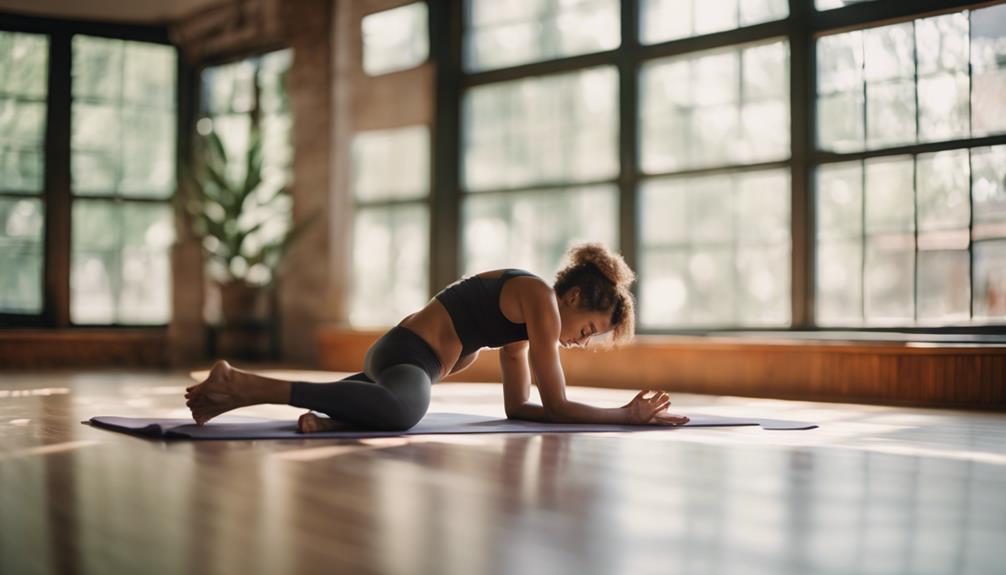
Start on your hands and knees, with your hands beneath your shoulders and your knees beneath your hips. Slowly round your back as far as comfortable, then move toward a gentle arch. Let the movement travel through your spine without dropping heavily into your lower back.
Use a small range if the full motion feels uncomfortable. The goal is smooth mobility, not an extreme position. After easing lower back strain, bedtime yoga stretches may help relax your body and prepare you for restful sleep.
4. Child’s pose variation
From hands and knees, move your hips back toward your heels while reaching your arms forward. You can widen your knees or place a cushion beneath your hips or chest to make the position easier. Rest for a few breaths, then return slowly to the starting position.
If bending forward aggravates your symptoms, try resting your chest on a chair or skip this exercise.
5. Figure-four hip stretch
Lie on your back with both knees bent. Place one ankle over the opposite thigh, forming a figure-four shape. If comfortable, hold behind the supporting thigh and draw it slightly toward you. Keep your head and shoulders relaxed, and stop if you feel discomfort in the back or knee.
Tightness around the hips can affect how you move, so a gentle hip stretch may complement lower back mobility work.
How to use stretching safely
- Begin with one or two exercises rather than completing a long routine immediately.
- Hold relaxed stretches for several breaths instead of forcing a timed maximum.
- Use slow transitions, particularly when getting up from the floor.
- Stop if pain becomes sharp, shoots into a limb, or leaves you feeling worse afterward.
- Repeat only as often as your symptoms tolerate; more stretching is not always better.
Add gentle strengthening after the acute discomfort settles
Stretching can improve comfort, but long-term recovery may also require gradual strengthening. When ordinary movements are becoming easier, consider gentle exercises such as bridges, bird-dog movements, or modified planks. These should be performed with controlled breathing and without allowing the lower back to sag or twist.
Progress slowly. If strengthening repeatedly brings back significant pain, pause and ask a healthcare professional or physical therapist to review your technique and recommend appropriate alternatives.
Helpful daily habits
Break up long periods of sitting with brief movement, adjust your workstation so you are not continually bending or reaching, and use comfortable positions when sleeping and changing posture. A short, easy walk may be more useful than remaining completely still, provided walking does not worsen your symptoms.
Gentle lower back stretches are best viewed as one part of recovery. Pairing comfortable movement with gradual strengthening and sensible daily habits can support mobility while the strain settles. If improvement does not occur, or if warning symptoms appear, seek personalised medical guidance rather than continuing to stretch through the pain.