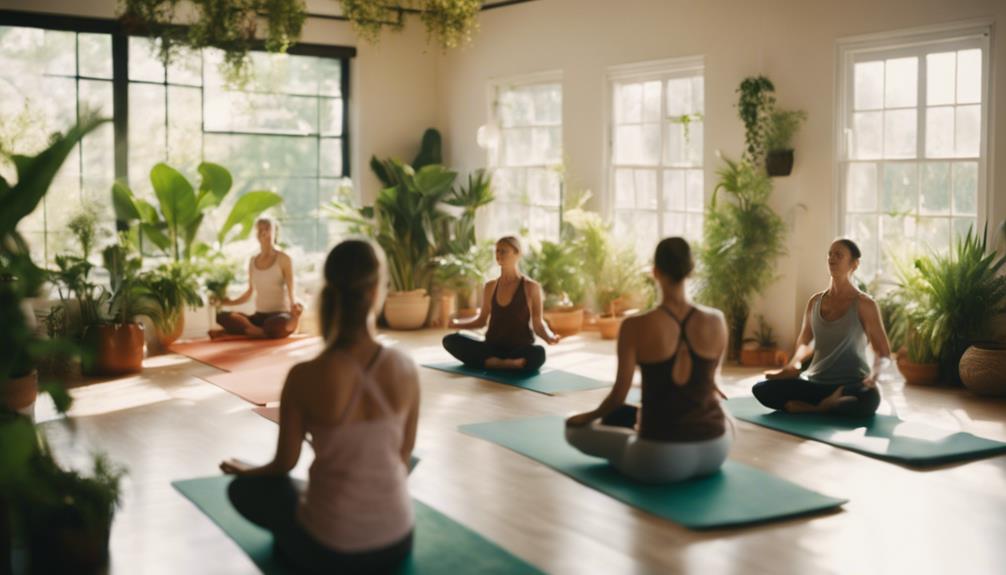

Upper back discomfort often develops alongside long periods of sitting, repetitive work, heavy lifting, or stress-related tension in the neck and shoulders. A gentle yoga practice can help you move the thoracic spine, open the chest, and build awareness of how you hold your shoulders. The aim is not to force a deep stretch, but to restore comfortable movement and reduce unnecessary muscular effort. Exploring broader wellness benefits can help you understand how yoga supports comfort, mobility, and overall health.
Use the following sequence as a starting point. Move slowly, breathe steadily, and stay within a range that feels comfortable. Yoga may complement other care, but it should not replace medical advice for persistent or severe symptoms.
How yoga can support the upper back
Many upper back problems are associated with reduced movement through the thoracic spine, tight muscles across the chest and shoulders, and weakness or fatigue around the shoulder blades. Gentle yoga combines mobility work, stretching, controlled strengthening, and conscious breathing. Together, these elements can help you notice tension earlier and practice more comfortable posture and movement habits.
Breathing is especially useful during the practice. Slow, even breaths can help you avoid bracing the shoulders and encourage relaxation while you move.
Yoga poses for upper back pain
Cat-Cow
Start on your hands and knees, with your hands beneath your shoulders and knees beneath your hips. As you inhale, gently lengthen the spine, lift the chest, and allow the upper back to move toward a mild extension. As you exhale, round the spine and let the shoulder blades spread. Keep the movement smooth rather than exaggerated.
Complete three to six slow cycles, coordinating each movement with your breath. This is a useful opening exercise because it moves the spine through flexion and extension without requiring a long hold.
Thread the Needle
From hands and knees, slide your right arm underneath your left arm, allowing the right shoulder and side of the head to lower toward the mat. Keep the movement gentle and let the upper back rotate only as far as comfortable. Breathe into the back of the ribs, then return to the starting position and change sides.
Remain in the position for several steady breaths on each side. If turning causes discomfort, make the movement smaller or choose a non-rotational stretch instead.
Puppy Pose
Keep your hips above your knees and walk your hands forward. Lower the chest toward the floor while maintaining length through the spine. Your forehead can rest on the mat or on a folded blanket if reaching the floor is uncomfortable.
This pose gently opens the chest and front of the shoulders while encouraging movement through the upper back. Do not force the arms or allow the lower back to take over. Hold for approximately 30 to 60 seconds, breathing comfortably. For additional relief, posture-focused stretches can complement yoga asanas by gently releasing tension throughout the upper back.
Eagle Arms
You can practice this seated or standing. Extend your arms forward, cross one arm under the other, and bring the palms together if that feels natural. If the palms do not meet, simply hold the backs of the hands or place the hands on opposite shoulders.
Lift the elbows slightly while keeping the shoulders away from the ears. You should feel a stretch across the area between the shoulder blades, not a sharp sensation in the shoulders. Take several breaths, then switch the crossing of the arms.
Sphinx Pose
Lie on your stomach and place your forearms on the floor with the elbows under or slightly in front of the shoulders. Press gently through the forearms to lengthen the chest forward, keeping the neck relaxed. Use only enough lift to create a comfortable opening through the front of the body.
Sphinx can introduce mild strengthening for the muscles supporting the spine. Focus on length rather than height, and come out of the pose if you feel compression or pain in the lower back.
A simple practice plan
For a short session, begin with a minute or two of relaxed breathing. Follow with Cat-Cow, Thread the Needle, Puppy Pose, Eagle Arms, and Sphinx. Spend several breaths in each held position and finish with a comfortable seated position or a gentle twist that does not provoke symptoms.
Consistency is generally more useful than intensity. A 10- to 20-minute practice several times a week may be easier to maintain than an occasional long session. During a workday, brief movement breaks can also help. Stand up, change position, roll the shoulders gently, or perform a few controlled spinal movements instead of remaining still for prolonged periods.
Make the practice more comfortable
- Move slowly and avoid bouncing or forcing a stretch.
- Keep the breath even; holding your breath often signals that the pose is too demanding.
- Use a folded blanket beneath the hands, knees, forehead, or shoulder for support.
- If pressure on the wrists is uncomfortable, try making a fist, using a folded mat, or choosing a standing variation.
- Reduce the range of rotation or skip a pose if it increases discomfort.
When to stop and seek advice
Stop exercising and seek professional guidance if you experience numbness, tingling, sharp pain traveling into an arm, sudden severe pain, or symptoms that worsen with movement. Extra care is appropriate after an injury or surgery, during pregnancy, or when you have a diagnosed spinal condition. A healthcare professional, physical therapist, or appropriately qualified yoga therapist can help adapt the practice to your needs.
Practiced patiently, these yoga poses can be a useful part of a broader approach to upper back comfort that also includes regular movement, relaxed breathing, and attention to sitting and standing habits.