Lower back pain can make sitting, walking, bending, and sleeping uncomfortable. Tight hips, hamstrings, and surrounding muscles may contribute to stiffness, while long periods of inactivity can make movement feel more difficult. Gentle stretching may help some people move more comfortably, but it should not be used to push through sharp, spreading, or worsening pain.
Try the movements below on a comfortable, stable surface. You do not need to complete all 13 at once. Start with three or four that feel appropriate, move slowly, and stop any exercise that aggravates your symptoms.
Before you begin
- Warm up with a few minutes of easy walking or gentle movement.
- Breathe steadily rather than holding your breath.
- For still stretches, begin with 15 to 30 seconds on each side and repeat once or twice.
- Stretch to mild tension, not pain. Avoid bouncing or forcing a position.
- Use a folded towel, cushion, or yoga mat for comfort when needed.
13 stretches and mobility exercises for the lower back
1. Cat-cow
Start on your hands and knees, with your hands below your shoulders. Slowly round your back as you tuck your chin, then gently lift your chest and tailbone as you lengthen your spine. Move through a comfortable range for six to eight slow repetitions.
2. Child’s pose
From a kneeling position, sit your hips back toward your heels and reach your arms forward. Let your forehead rest on a cushion if necessary. Keep the position gentle; widening your knees may make it more comfortable.
3. Single knee-to-chest stretch
Lie on your back with both legs relaxed. Bring one knee toward your chest and hold behind the thigh or at the shin. Keep the opposite leg in a comfortable position, then change sides.
4. Double knee-to-chest stretch
Lie on your back and draw both knees toward your chest, holding them lightly. Breathe slowly and avoid pulling hard. If this position increases back or leg symptoms, return to the single-leg version.
5. Supine hamstring stretch
Lie on your back and raise one leg. Hold behind the thigh, or use a towel around the foot, and gently straighten the knee until you feel a stretch along the back of the leg. Keep the other leg relaxed.
6. Half-kneeling hip-flexor stretch
Kneel on one knee with the opposite foot in front. Keep your torso upright, gently tuck your pelvis, and shift your hips forward until you feel the stretch at the front of the kneeling hip. Do not arch your lower back.
7. Figure-four stretch
Lie on your back with both knees bent. Place one ankle over the opposite thigh, then draw the supporting leg toward you. This targets the outer hip and buttock. Switch sides without forcing the knee downward.
8. Seated hamstring stretch
Sit near the edge of a chair and extend one leg with the heel on the floor. Keeping your back long, hinge forward slightly from your hips until you feel a stretch behind the thigh. Avoid rounding deeply into the movement.
9. Lying spinal rotation
Lie on your back with your knees bent and feet supported. Let both knees move slowly to one side while keeping your shoulders relaxed, then return to the center and repeat on the other side. Use a cushion under the knees if the range feels too strong.
10. Windshield wipers
With your knees bent and feet on the floor, gently lower both knees a short distance from side to side. Keep the movement easy and rhythmic. This is a mobility exercise rather than a deep stretch.
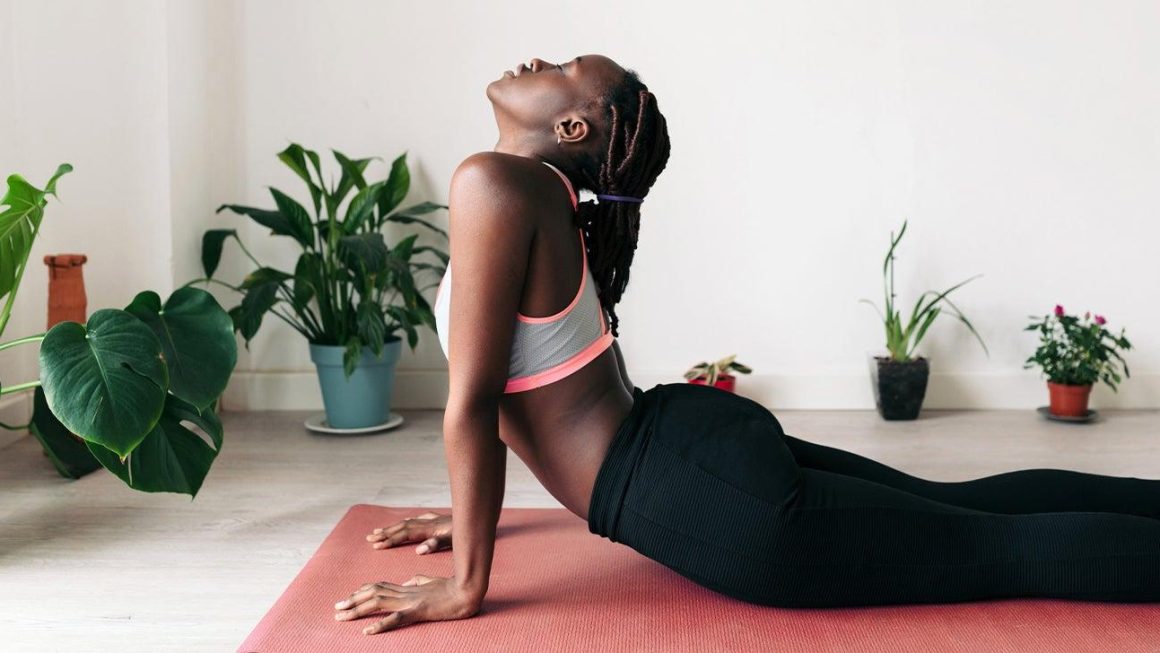
11. Supported prone press-up
Lie on your stomach and rest on your forearms, lifting your chest slightly while keeping your hips relaxed. Hold briefly, then lower down. Some people find this comfortable, while others do not; stop if it increases pain or symptoms traveling into the leg.
12. Gentle supported squat
Hold a sturdy surface for balance and lower into a shallow squat, keeping your feet comfortable and your heels grounded if possible. Let your hips move back and keep the movement controlled. Rise slowly rather than dropping into the position.
13. Happy baby variation
Lie on your back and bring your knees toward your ribs. Hold behind the thighs, or hold the feet only if that is comfortable, while keeping your lower back relaxed. A smaller range is perfectly acceptable.
How to build a routine
A short routine is often easier to maintain than an occasional long session. You might begin with cat-cow, a hip-flexor stretch, a hamstring stretch, and a gentle rotation. Practice after a brief warm-up and adjust the selection according to how your body responds. Regular movement such as easy walking can also help break up long periods of sitting.
When to get medical advice
Stretching is not suitable for every cause of back pain. Speak with a healthcare professional before starting if you have a significant injury, persistent or recurring pain, or a diagnosed back condition. Seek urgent medical attention for back pain accompanied by new loss of bladder or bowel control, numbness around the groin, severe weakness, fever, or pain following major trauma.
The goal is comfortable movement, not achieving the deepest stretch. Progress gradually, and choose exercises that leave your back feeling the same or better afterward.