Group yoga poses turn an individual practice into a shared experience. Working with a partner or small group can encourage communication, coordination, and mutual support while adding a playful social element to the session. The best poses are not necessarily the most complicated ones; they are the ones that allow everyone to participate comfortably and safely.
What Are Group Yoga Poses?
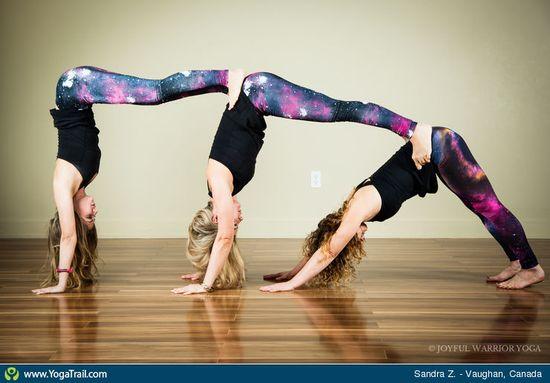
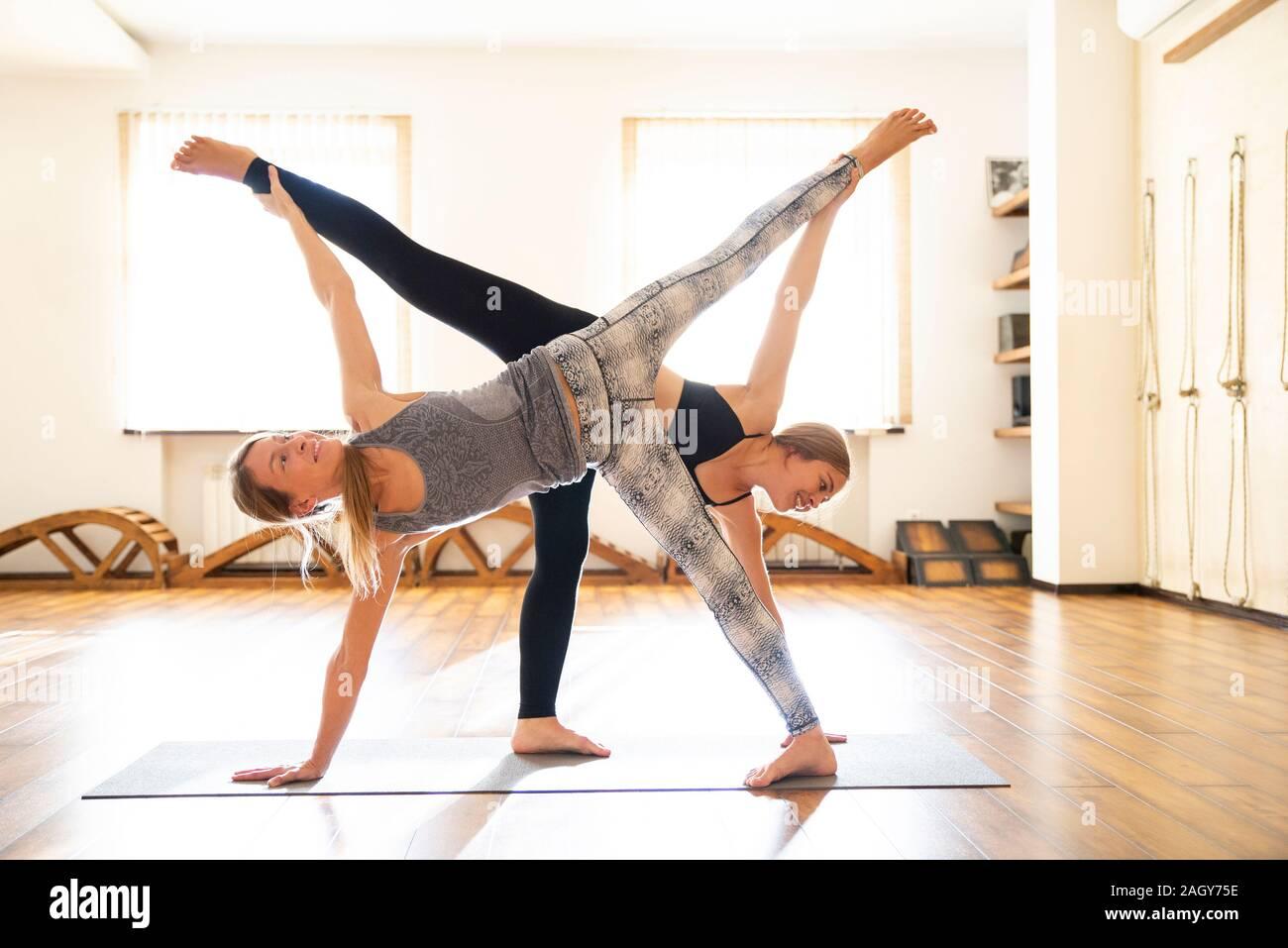
Group yoga poses are yoga positions adapted for two or more people. Some involve light contact, such as holding hands or supporting one another’s balance. Others simply ask participants to move in rhythm, create a shape together, or share a supported stretch.
These poses can be included in a regular class, a small gathering with friends, or a team-building session. They work particularly well when the group begins with simple movements and gradually builds trust before attempting more demanding balances.
Accessible Group Yoga Poses to Try
Partner Tree Pose
Stand beside a partner with your inside shoulders or hips near each other. Place your inside hands together or hold hands for support. Shift weight into the outside leg and bring the opposite foot to the ankle or calf—never directly onto the knee joint. If balance feels steady, raise the arms together. Switch sides after a few breaths.
This variation offers a gentler way to explore balance because each person can use the other for stability. Keep the standing knee soft and step out of the pose whenever needed.
Seated Partner Forward Fold
Sit facing your partner with the soles of your feet touching. Hold hands or forearms, then take turns leaning back slightly while the other person folds forward from the hips. Move slowly and communicate throughout the stretch. The person folding should keep the spine comfortable rather than trying to reach a particular depth.
This pose is best treated as a supported movement, not a test of flexibility. Change roles and stop if either participant feels pulling, pain, or pressure.
Partner Twist
Sit back-to-back with your partner in a comfortable cross-legged position or with both legs extended. Take a few breaths to feel the support of one another’s backs. On an exhale, each person turns gently to one side, using the hands on the thighs or floor for balance. Repeat on the opposite side.
Keep the movement small and let the rotation come from the upper body. Avoid pushing against your partner to deepen the twist.
Group Warrior Shape
Stand in a line or a circle and move into Warrior II. Participants can extend their arms toward one another without gripping or pulling, creating a connected group shape. Keep the front knee aligned in the same direction as the toes and adjust the stance so that everyone can breathe comfortably.
This is a useful group pose because it creates togetherness without requiring participants to support one another’s body weight.
Circle Seated Stretch
Sit in a circle with legs crossed or extended, depending on comfort. Begin with a few shared breaths, then raise the arms, fold forward, or take a gentle side bend together. One person can guide the pace while the rest of the group follows.
A seated circle works well at the beginning of a session as a way to settle in, or at the end as a quiet cooldown.
Benefits of Practicing Together
Group poses can add several dimensions to a yoga session:
- Communication: Partners learn to give clear instructions, ask permission, and respond to feedback.
- Shared focus: Moving together encourages participants to pay attention to timing, breath, and alignment.
- Support: A partner can provide reassurance during a balance without forcing anyone to go further.
- Motivation: Practicing with others can make a session feel more engaging and easier to maintain.
- Connection: Cooperative movement creates opportunities for trust, concentration, and relaxed enjoyment.
How to Plan a Safe Group Yoga Session
- Choose a clear, level surface with enough room for every mat and participant.
- Begin with individual warm-ups, such as gentle spinal movements, shoulder rolls, and easy standing poses.
- Explain the pose before people make physical contact or begin balancing.
- Ask for consent before assisting, touching, or holding a partner.
- Use verbal check-ins such as “Is this comfortable?” and “Would you like to come out?”
- Keep at least one person responsible for observing the group if a pose involves several participants.
- End with individual stretches, relaxation, or breathing rather than moving abruptly from a demanding pose.
Important Safety Considerations
Group yoga should be cooperative, not competitive. No one should be lifted, pushed, pulled, or asked to support more weight than feels manageable. Avoid poses that place pressure on the neck, spine, joints, or abdomen, especially when participants are unfamiliar with one another’s abilities.
Anyone with an injury, medical condition, pregnancy, or significant balance concern should adapt the practice and seek appropriate professional guidance. Participants should be free to rest in a comfortable position at any time. A successful group pose is one in which everyone feels informed, respected, and able to stop.
Building a Positive Group Practice
Start with simple partner work before attempting more complex arrangements. Invite participants to notice how cooperation changes the experience of familiar poses, and leave time to discuss what felt stable or challenging. With clear communication and a non-competitive attitude, group yoga poses can make a practice more social while preserving the calm, attentive qualities of yoga.