Warrior 2 Pose, or Virabhadrasana II, is a standing yoga posture that combines a wide stance, a bent front leg, and an open-hip position. It is commonly used in yoga sequences because it develops physical endurance while encouraging steady breathing and concentration.
Although Warrior 2 can look simple, maintaining it with good control requires coordinated work from the legs, hips, core, shoulders, and feet. The pose can be adapted for beginners and refined over time as mobility and strength improve.
What is Warrior 2 Pose?
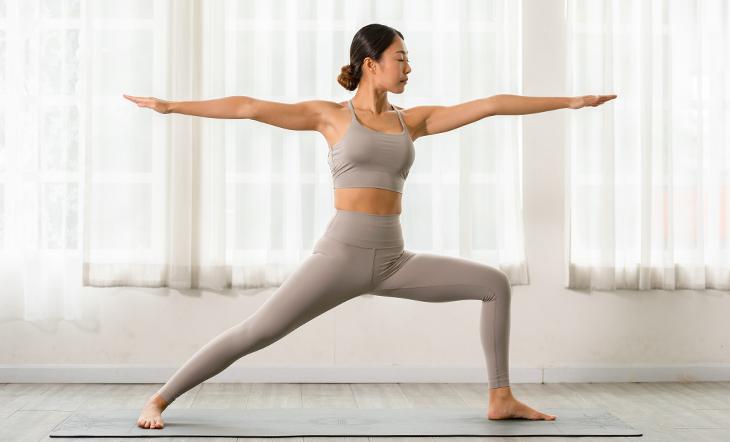
In the standard version, the feet are positioned several feet apart. One foot points forward while the back foot turns slightly outward. The front knee bends in the direction of the front toes, the hips remain open toward the long edge of the mat, and the arms extend in opposite directions.
The torso stays upright and the gaze usually rests over the front hand. Rather than forcing the body into a deep position, the aim is to create a stable, comfortable shape that can be held with smooth breathing.
Physical benefits of Warrior 2
Builds lower-body strength
Holding the bent-leg position asks the quadriceps, hamstrings, glutes, calves, and muscles around the ankles to work together. This can improve the strength and endurance needed for standing, walking, and other forms of movement.
Challenges balance and stability
The wide stance creates a strong base, but the pose still requires awareness of how weight is distributed across both feet. Engaging the legs and gently drawing the abdomen inward can help the body remain steady without unnecessary tension.
Encourages hip and shoulder mobility
Warrior 2 places the hips in an open position and asks the arms to reach away from the shoulders. Practiced gradually, it may help you explore comfortable mobility in the inner thighs, hips, chest, and shoulders. It should not involve forcing a joint beyond its available range.
Supports upright posture
The pose encourages an elongated spine and awareness of the relationship between the pelvis, rib cage, neck, and shoulders. This posture practice can make it easier to notice habits such as collapsing through the torso or lifting the shoulders toward the ears.
Mental benefits and mindful practice
Warrior 2 requires attention to several details at once: foot placement, knee direction, breathing, arm position, and the steadiness of the gaze. That combination can make the pose a useful moving-meditation exercise.
Holding the posture for a few calm breaths may help you develop concentration and body awareness. Slow, deliberate practice can also provide a structured way to shift attention away from distractions and toward breathing and physical sensations. Yoga is not a substitute for professional care for anxiety or other health conditions, but mindful movement may be a helpful part of a broader wellbeing routine.
How to practise Warrior 2
- Stand near the center of your mat and step your feet wide apart. Choose a distance that allows you to feel stable rather than stretched.
- Turn your right foot toward the short edge of the mat and angle the left foot slightly outward. Aim for a comfortable relationship between the front heel and the back foot; it does not need to be exact.
- Bend the right knee while keeping it tracking in the same general direction as the second and third toes. Adjust the stance if the knee moves inward or feels strained.
- Keep the pelvis and chest open toward the long edge of the mat without forcing the hips into position.
- Extend the arms at shoulder height, reaching forward and backward. Relax the shoulders while keeping the arms active.
- Lengthen through the crown of the head and look over the front hand if that feels comfortable. Continue breathing evenly.
- Hold for several breaths, then straighten the front leg and repeat on the other side.
Helpful adjustments for beginners
- Use a shorter stance if your balance is uncertain or if the front knee cannot remain comfortable.
- Do not force the front thigh to become parallel with the floor. A higher position is still a valid version of the pose.
- Rest your hands on your hips while learning the leg and hip alignment, then add the arm position.
- Keep a slight bend in the front knee rather than locking it straight when you come out of the posture.
- Practise near a wall or chair if you need extra support.
Safety considerations
Warrior 2 should feel demanding but not painful. Come out of the pose if you experience sharp pain, pinching, numbness, dizziness, or difficulty breathing. People with current knee, hip, ankle, or shoulder problems may need to modify the stance or seek guidance from a qualified yoga teacher or healthcare professional.
Focus on consistent breathing and controlled alignment instead of holding the pose for as long as possible. With regular, attentive practice, Warrior 2 can become a useful posture for developing lower-body strength, comfortable mobility, balance, and focused awareness.