Starting a daily yoga practice does not require advanced flexibility, a long routine, or a perfectly designed studio. The most effective approach is to make yoga simple enough to repeat and flexible enough to fit your real life. With a consistent time, a suitable space, and a gradual progression, a few minutes on the mat can become a meaningful part of your day.
1. Choose a realistic time
A regular practice begins with a schedule you can actually follow. Look at your normal routine and choose a time when interruptions are least likely. Some people prefer practicing in the morning, before the day becomes busy. Others find that gentle yoga in the evening helps them slow down after work or other responsibilities.
The specific time matters less than its reliability. Treat your practice as a planned part of the day rather than something you will do only when you happen to have spare time. You can add it to an existing habit, such as getting ready in the morning or preparing for bed, to make the routine easier to remember.
A daily practice also does not have to mean a long session every day. If your schedule changes, shorten the routine rather than abandoning it altogether. Missing occasionally is normal; the goal is to return to the practice without turning one missed day into a reason to stop.
2. Begin with a small routine
Starting modestly makes it easier to learn how your body responds to yoga. Begin with a few minutes and a small selection of basic poses instead of attempting an advanced sequence immediately. Mountain Pose, Child’s Pose, and Downward-Facing Dog are examples of familiar foundational poses, but choose movements that feel appropriate for your experience and physical condition.
Use the first sessions to become comfortable with breathing, alignment, and controlled movement. Avoid forcing your body into a deeper stretch or comparing your practice with someone else’s. A pose should not require you to ignore pain or strain.
As the routine becomes familiar, increase its length or add one new pose at a time. A gradual approach gives you room to build confidence, strength, flexibility, and endurance without making the practice feel overwhelming. It also helps you notice which movements feel useful and which need modification.
3. Create a calm practice space
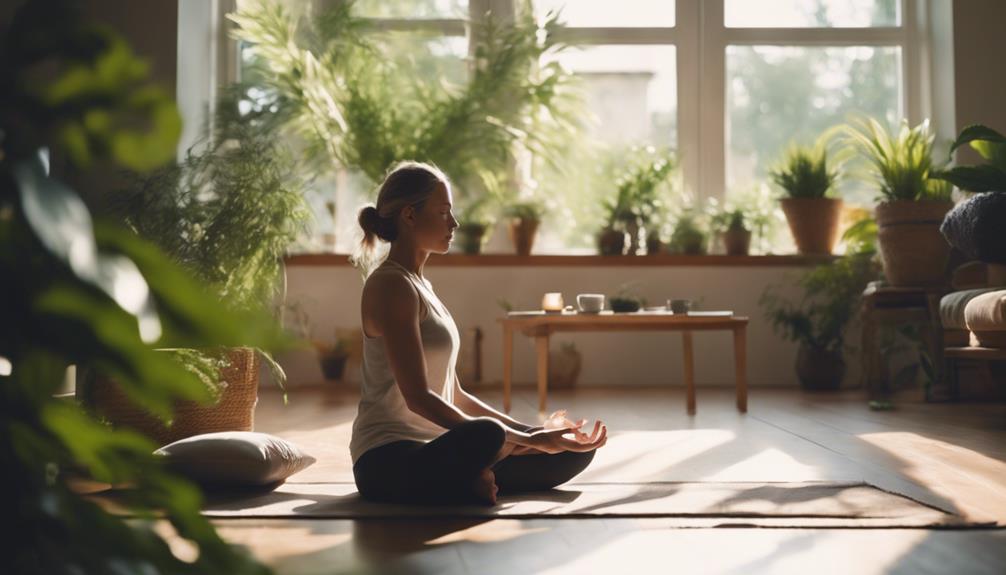
A dedicated space can make it easier to begin. You do not need a separate room: a clear area of a bedroom, living room, or another quiet part of your home may be enough. Remove objects that could restrict your movement, and keep the floor clear so you can focus on the practice rather than rearranging the room each time.
Try to reduce avoidable distractions. Silence your phone, turn off unnecessary notifications, and let other people in your household know when you plan to practice if that is helpful. Soft lighting, a comfortable mat, or quiet background sounds may make the space more inviting, but none of these additions are essential.
The best practice area is one that feels accessible and pleasant. If setting up the space takes more effort than the routine itself, simplify it. Leaving your mat ready in a safe location can remove one small barrier between you and your practice.
4. Build consistency without chasing perfection
Consistency comes from repeating a manageable routine, not from making every session difficult. Some days you may have time for a longer sequence; on other days, a few mindful stretches and breaths may be enough. Both can support the habit of showing up.
- Set a regular time, while allowing occasional adjustments.
- Start with a short sequence you can complete comfortably.
- Increase duration and complexity gradually.
- Pay attention to discomfort and stop any movement that causes pain.
- Return to the routine after missed days without self-criticism.
Over time, a daily yoga practice can become a dependable opportunity to move, breathe, and check in with yourself. Keep the routine practical, listen to your body, and let it develop at a pace you can sustain.