Twin yoga poses, also called partner yoga, turn an individual practice into a shared experience. Practicing with another person can add communication, coordination, and encouragement while giving you a fresh way to explore familiar movements. The aim is not to create the most impressive shape or hold a pose for the longest time. It is to move with awareness, respect one another’s boundaries, and enjoy the practice together.
Why Practise Yoga with a Partner?
A partner can help make a session more engaging, but the benefits depend on how you work together. Taking turns, checking in, and responding to one another can make both people more attentive to alignment and breath.
- Shared focus: Matching movement and breathing encourages concentration.
- Communication: Partner work requires clear instructions and regular check-ins.
- Balance practice: Gentle contact can provide a reference point while you explore balance.
- Motivation: A shared session can make it easier to begin and stay engaged.
- Connection: Cooperative movement creates time to practise trust and mutual support.
Before You Begin
Choose a clear, non-slip surface and allow enough space for both mats. Start with several minutes of easy movement, such as shoulder rolls, cat-cow, gentle lunges, and relaxed standing stretches. Agree on simple signals such as “stop,” “less,” or “more support” before trying partner poses.
Move slowly and never pull, lift, or press another person into a deeper position. Both partners should be able to leave the pose independently. Avoid placing body weight on a partner’s neck, spine, joints, or abdomen. If either person feels sharp pain, numbness, dizziness, or instability, come out of the pose and rest. More demanding partner balances are best attempted with instruction from a qualified yoga teacher and an appropriate spotter.
Twin Yoga Poses to Try
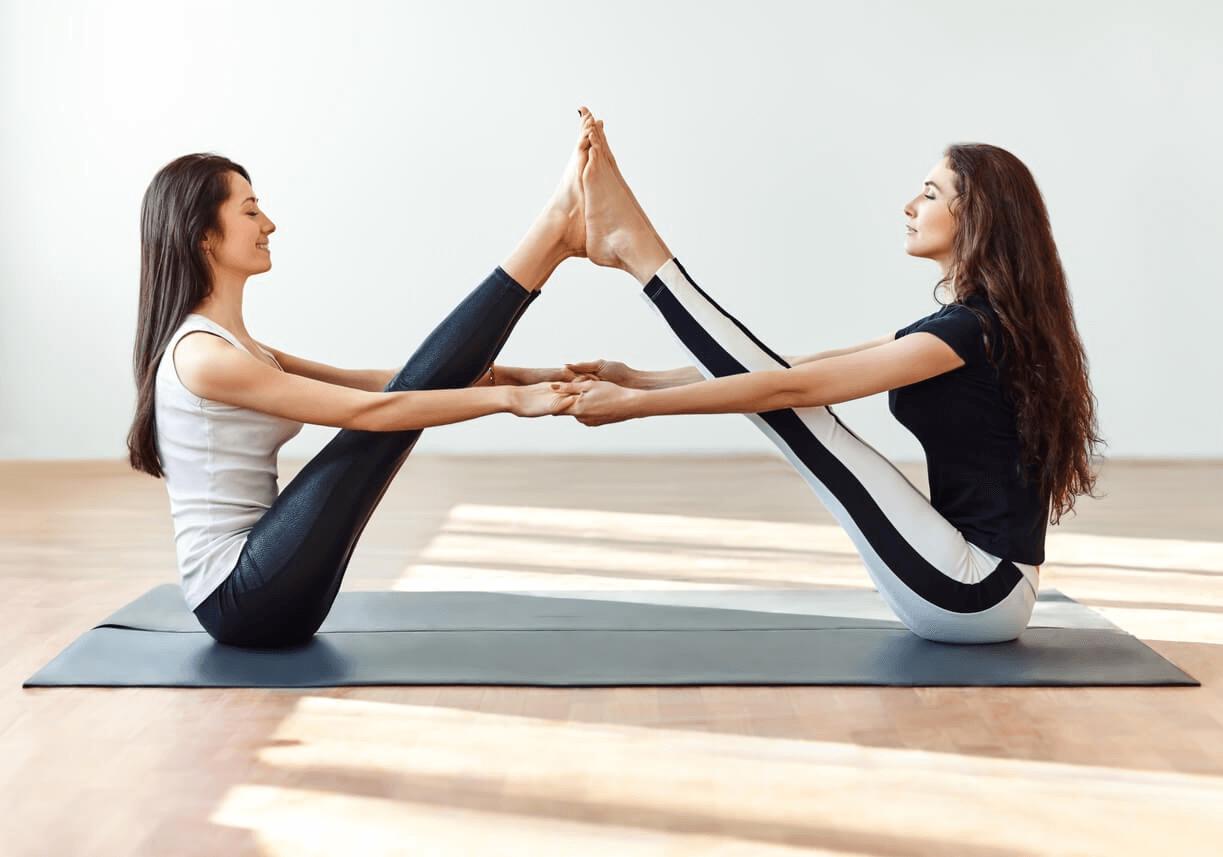
1. Seated Partner Forward Stretch
Sit facing your partner with the soles of your feet touching and your legs comfortably extended. Hold hands or lightly hold each other’s forearms. One person slowly leans back while the other allows the movement to create a gentle forward stretch, then switch roles. Keep the spine long rather than collapsing toward the legs. The movement should be mild and controlled; do not use your partner’s arms to force a deeper stretch.
2. Back-to-Back Easy Seat
Sit back-to-back with your legs crossed or extended in a comfortable position. Let your backs provide light support without pushing into one another. Rest your hands on your knees and take several slow breaths. Notice how your breathing affects the contact between your backs. This is a simple option for beginning a session or settling your attention before more active poses.
3. Partner Tree Pose
Stand side by side and place the hand closest to your partner on their shoulder or upper arm. Bring the opposite foot to the inner calf or thigh of the standing leg, avoiding the knee joint. If this feels unsteady, keep the toes on the floor as a kickstand. Try raising the outer arm only if both people remain stable. Change sides after a few breaths and use the support for balance rather than leaning heavily on your partner.
4. Mirrored Warrior III
Face one another and stand far enough apart to extend your arms comfortably. Shift weight onto one leg, hinge forward from the hips, and extend the other leg behind you. Reach toward your partner’s hands or forearms for a light connection. Keep the standing knee soft and the hips as level as possible. Return to standing slowly, then repeat on the other side. This pose is optional for beginners; a simple supported hinge is a useful alternative.
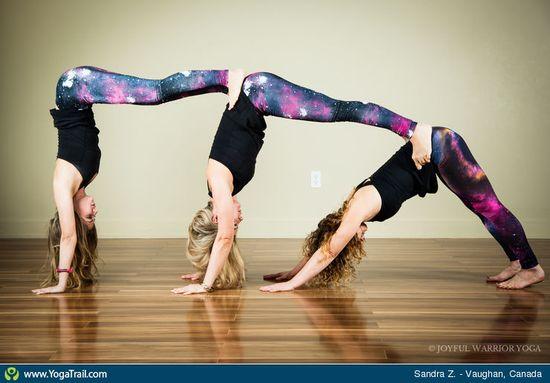
5. Double Downward-Facing Dog
Practise two separate Downward-Facing Dogs side by side rather than stacking one person on top of another. Face the same direction with enough space between your mats. Move into the pose together, spread the fingers, and keep the knees bent if needed. You can turn your heads slightly to check in, but avoid twisting the neck. This mirrored version creates a shared rhythm without placing extra weight on either partner.
How to Make the Practice Work
- Choose poses that suit both people’s experience and mobility.
- Explain what you intend to do before making physical contact.
- Use blocks, folded blankets, or a wall when extra stability is helpful.
- Keep breathing steadily instead of competing to hold a pose longer.
- Switch roles when a pose involves support so the practice remains balanced.
- Finish with a quiet seated breath or gentle relaxation before leaving the mats.
Keep the Focus on Cooperation
Twin yoga does not need acrobatics to be rewarding. Simple mirrored poses and gentle points of contact can be enough to build awareness and make the session feel shared. With patience, clear consent, and a willingness to laugh at imperfect attempts, partner yoga can add variety to your routine while keeping comfort and safety at the centre.