Middle back pain, also called thoracic back pain, is felt between the base of the neck and the bottom of the rib cage. It may be associated with long periods of sitting, poor posture, muscle strain, inactivity, stress, or an injury. Gentle yoga can be a useful part of a movement routine by easing stiffness, encouraging fuller breathing, and improving awareness of posture and muscle tension.
Yoga is not suitable for every cause of back pain, however. Treat the movements below as gentle options rather than a diagnosis or a replacement for professional care. Stop if a pose causes sharp, worsening, or radiating pain.
How yoga may help middle back discomfort
A carefully paced practice can combine mobility, light strengthening, breathing, and relaxation. These elements may help you move the thoracic spine and shoulders more comfortably while reducing the tendency to brace or hold tension. Yoga may also support better posture habits, particularly when back discomfort is linked to prolonged desk work or inactivity.
The goal is not to force the spine into a deeper stretch. Small, controlled movements performed with steady breathing are often a better starting point than intense poses.
Gentle yoga poses to try
Cat–Cow
Begin on your hands and knees, with your hands below your shoulders and knees below your hips. As you inhale, gently broaden your chest and allow your spine to move into a comfortable extension. As you exhale, round your back slightly and let your head follow the movement without forcing your neck. Move slowly for several breaths, focusing on the area between your shoulder blades.
Supported Child’s Pose
Kneel and sit back toward your heels, placing a cushion or folded blanket under your chest if needed. Reach your arms forward or rest them beside you. Keep the position comfortable and breathe into the back and sides of your ribs. If kneeling is uncomfortable, try resting your upper body on a chair or remain seated and lean forward gently.
Thread the Needle
From hands and knees, slide your right arm underneath your left arm, allowing your right shoulder and the side of your head to move toward the floor. Keep the movement mild and avoid collapsing into the supporting shoulder. Return to the starting position and repeat on the other side. This can provide a gentle rotation and stretch around the upper and middle back.
Seated spinal movement
Sit comfortably on a chair with both feet on the floor. Place your hands across your chest or on your thighs. Slowly turn your torso to one side while keeping your pelvis facing forward, then return to center and repeat on the other side. Rotate only as far as you can without pain or strain.
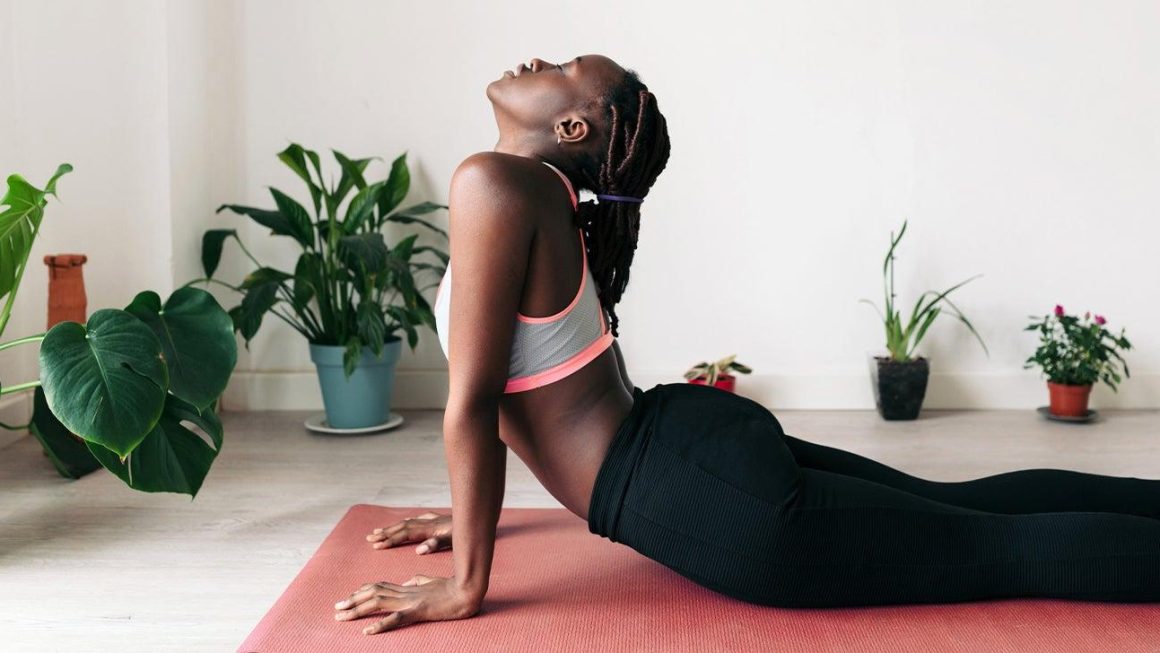
Low Cobra or sphinx variation
Lie on your stomach with your forearms on the floor and elbows near your sides. Gently lift your chest while keeping your neck relaxed and your lower ribs supported. Do not push for height or compress the lower back. If lying on your stomach is uncomfortable, skip this pose.
Tips for a safer practice
- Start with five to ten minutes of easy movement rather than a demanding full session.
- Use a wall, chair, cushions, or folded blankets to reduce strain and improve support.
- Keep breathing steadily; holding your breath often signals that you are working too hard.
- Move in and out of each pose slowly, especially during twisting or back-extension movements.
- Choose consistency over intensity. Short, comfortable sessions may be easier to maintain than occasional strenuous practices.
- Consider working with a qualified yoga teacher or physical therapist if you are unsure how to modify a pose.
When to seek medical advice
Consult a healthcare professional if middle back pain is severe, persistent, repeatedly returning, or began after a significant accident. Prompt medical attention is also important if pain is accompanied by chest pain, difficulty breathing, fever, unexplained weight loss, marked weakness or numbness, problems with balance, or changes in bladder or bowel control. Do not use yoga to push through symptoms that feel unusual or progressively worse.
Build a balanced routine
Yoga can be one part of managing middle back discomfort. Break up long periods of sitting, adjust your workstation where possible, walk regularly, and include comfortable strengthening as your tolerance improves. A calm practice that respects your limits can help you explore movement without turning back pain into a test of flexibility.