Yes, yoga may help improve posture, especially when poor alignment is related to muscle weakness, stiffness, limited mobility, or a lack of body awareness. It is not a quick fix, and it cannot correct every structural or medical cause of postural problems. However, a consistent practice can help you become more aware of how you hold your body while strengthening supportive muscles and easing areas of tension.
What good posture really means
Posture is the way you position your body while sitting, standing, moving, or resting. Good posture does not mean holding yourself rigidly or forcing your shoulders back all day. Healthy alignment is generally comfortable, balanced, and adaptable.
Many people spend long periods sitting at desks or looking down at phones. Over time, this may contribute to rounded shoulders, a forward head position, tight hips, or stiffness in the upper and lower back. Posture can also be affected by work habits, fitness level, stress, previous injuries, and individual body structure.
How yoga may support better alignment
Yoga combines controlled movement, strengthening, stretching, balance, and attention to breathing. These elements can support posture in several ways:
- Greater body awareness: Paying attention to the position of the spine, pelvis, shoulders, and feet can make it easier to notice habitual slouching or uneven weight distribution.
- Stronger support muscles: Appropriate poses can engage the muscles of the abdomen, back, hips, and legs, which help you maintain a stable position.
- Improved mobility: Gentle movement may reduce stiffness in areas such as the chest, shoulders, hips, and upper back.
- Better balance and control: Standing and balancing poses encourage coordinated movement and more even use of both sides of the body.
- Less unnecessary tension: Breathing and mindful movement may help you recognise when you are bracing or tightening muscles without need.
Yoga poses that can complement posture work
The most useful poses are not necessarily the most difficult. Focus on steady breathing, comfortable movement, and a neutral position rather than trying to force your body into a shape.
- Mountain Pose: A simple standing position for noticing how your feet, pelvis, ribcage, shoulders, and head are aligned.
- Cat-Cow: Gentle spinal movement that can improve awareness of the relationship between the pelvis, back, and neck.
- Bridge Pose: Strengthens the glutes and back of the body while encouraging controlled movement through the hips and spine.
- Child’s Pose: A restorative position that may feel relieving for the back, provided it is comfortable for your knees, hips, and shoulders.
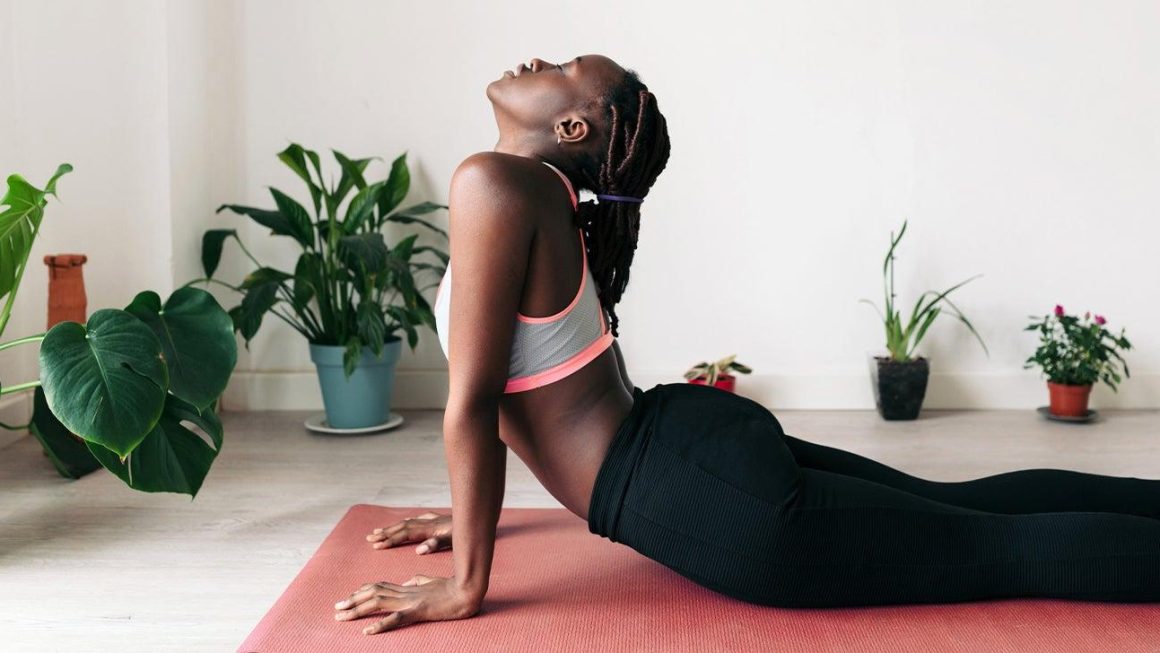
- Cobra or a gentle prone back extension: May strengthen the back and open the front of the body when performed without compressing the lower back.
- Supported chest and shoulder stretches: These may help counter prolonged sitting, particularly when the chest and shoulders feel tight.
How to build a posture-focused practice
Begin with a short routine that you can repeat consistently rather than attempting an intense session occasionally. A practice of gentle mobility, basic strengthening, and relaxed breathing may be more useful than simply holding stretches for a long time.
- Start with a few minutes of comfortable movement to warm up.
- Include exercises for the core, hips, upper back, and legs.
- Move slowly enough to notice whether your shoulders, neck, or lower back are compensating.
- Use props such as a cushion, block, or folded blanket when they improve comfort and control.
- Stand up and change position regularly during the day; yoga cannot fully offset hours of uninterrupted sitting.
A qualified instructor can help adapt poses to your mobility and teach safer alignment. If you are new to exercise, start gently and avoid treating discomfort as a sign that a pose is working.
Important limits and safety considerations
Yoga may improve how you move and hold yourself, but posture is not a single condition with one universal correction. Pain, numbness, weakness, dizziness, a significant injury, or a noticeable change in posture should be assessed by an appropriate healthcare professional. Stop a pose that causes sharp, worsening, or radiating pain.
It is also worth avoiding promises that yoga will permanently “realign” the spine or cure back and neck problems. A balanced programme may be helpful, but results depend on the reason for the posture issue, your consistency, and how you move outside the yoga session.
The bottom line
Yoga can be a useful part of improving posture by developing strength, mobility, balance, and awareness. The goal is not to hold a perfect pose throughout the day. Instead, aim to move more comfortably, vary your positions, and build the control needed to support your body in everyday activities.