A stiff back can make ordinary movements—standing up, turning, or reaching—feel less comfortable. A thoughtful yoga practice may help you move with greater ease by combining gentle spinal movement, stretching, breathing, and strength. The aim is not to force your back into a deep bend. Instead, focus on steady, controlled practice and a range of motion that feels appropriate for your body.
How yoga can support a more flexible back
Back flexibility depends on more than the spine alone. The hips, hamstrings, shoulders, abdominal muscles, and muscles along the back all influence how freely you move. Yoga can address these areas while also encouraging better body awareness.
- Gentle movement: Moving the spine through comfortable positions can help reduce the feeling of stiffness.
- Supportive strength: Controlled poses engage the muscles that help stabilize the torso and spine.
- Postural awareness: Paying attention to alignment may help you notice habits such as rounding the shoulders or sitting rigidly for long periods.
- Relaxation: Slow breathing and unhurried movement can ease general muscular tension and make stretching feel more comfortable.
A gentle yoga sequence for back flexibility
Try the following sequence on a firm, comfortable surface. Move slowly, breathe naturally, and stay within a pain-free range. You do not need to perform every pose in one session.
1. Cat-Cow movement
Begin on your hands and knees, with your hands beneath your shoulders and your knees beneath your hips. As you inhale, gently lengthen the front of your body and allow the spine to move toward a mild arch. As you exhale, slowly round the back without forcing the chin toward the chest. Continue for several comfortable breaths.
This movement warms the spine and introduces controlled flexion and extension rather than holding the back in one position.
2. Child’s Pose
From hands and knees, ease your hips back toward your heels and fold forward as far as feels comfortable. Rest your forehead on a cushion or yoga block if needed. Your arms can extend forward or relax alongside your body.
Keep the pose restorative rather than intense. If the position is uncomfortable for your knees, place a cushion beneath them or choose a different stretch.
3. Low lunge with a gentle upper-body lift
Step one foot forward and lower the opposite knee to the floor. Keep the front knee comfortable and place your hands on your thigh or on blocks. From there, lengthen through the torso and gently lift the chest without collapsing into the lower back. Repeat on the other side.
This variation opens the front of the hip, an area that can feel tight after prolonged sitting, while encouraging an upright posture.
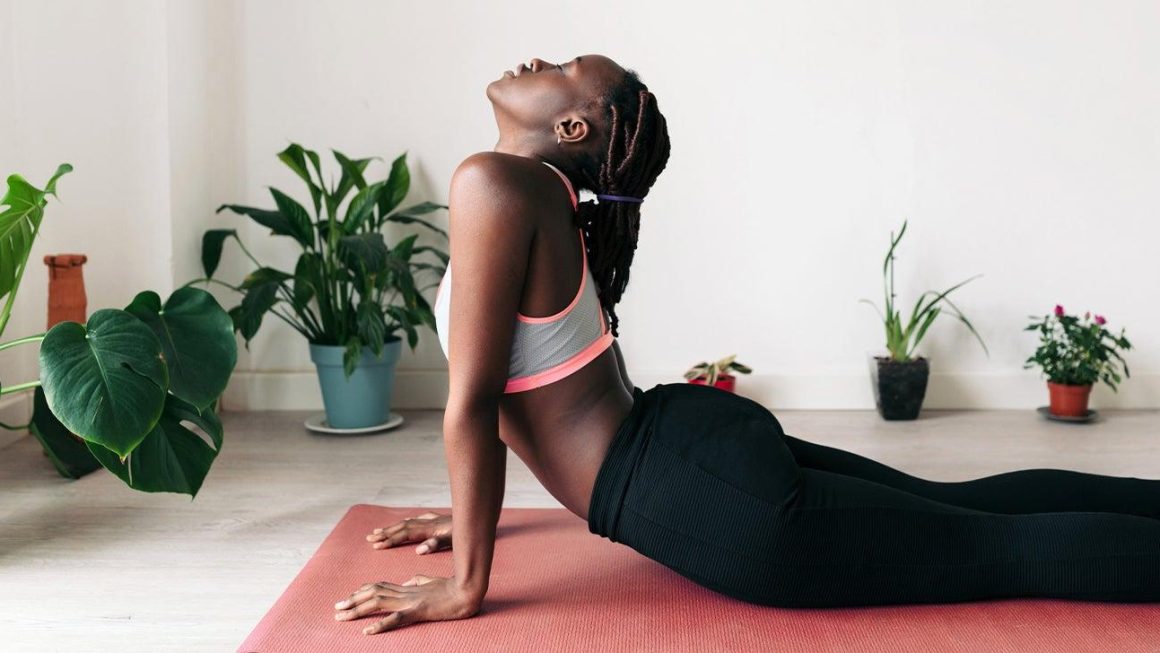
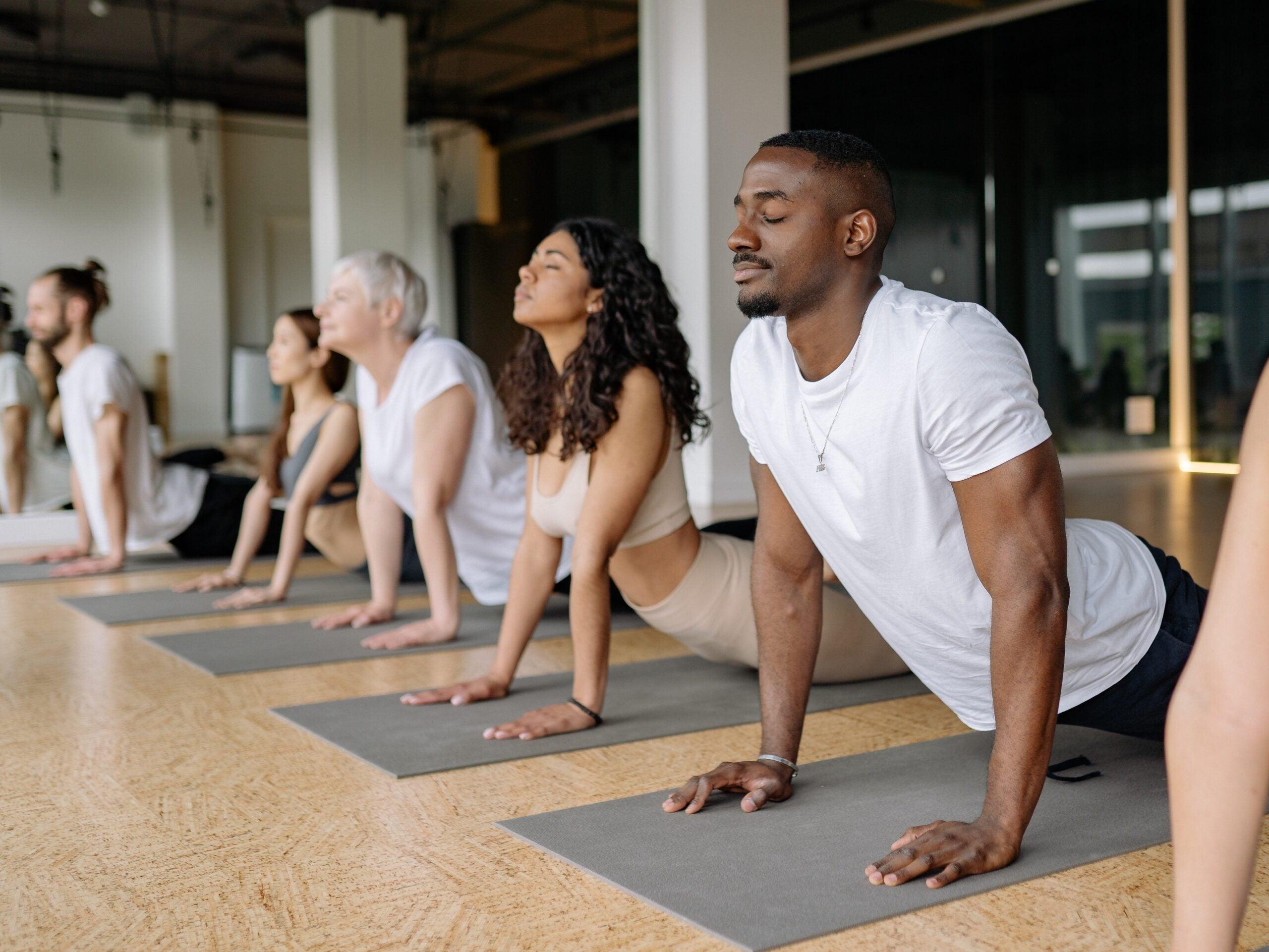
4. Sphinx Pose
Lie on your stomach and place your forearms on the floor with your elbows below or slightly in front of your shoulders. Press gently through the forearms as you lift the chest. Keep the movement small and allow the lower back to remain relaxed rather than pushing for height.
Skip this pose or reduce the lift if it creates pinching or discomfort in your lower back.
5. Supine knee-to-chest stretch
Lie on your back with both legs extended or your knees bent. Draw one knee toward the chest and hold behind the thigh or at the shin, avoiding pressure on the kneecap. Keep the opposite leg in a position that feels natural. Change sides, or bring both knees in if that feels comfortable.
This is a simple way to finish the active portion of the sequence without placing weight on the spine.
Practice tips that make a difference
- Start with five to ten minutes and build gradually rather than chasing a deep stretch.
- Warm up with easy walking or gentle movements if your body feels cold or stiff.
- Use blocks, cushions, or a strap to avoid reaching or rounding excessively.
- Keep your breathing smooth. Holding your breath is often a sign that you are working too intensely.
- Balance flexibility work with basic strength and regular movement throughout the day.
- Change position regularly if you spend many hours sitting.
When to modify or stop
Stretching should feel mild to moderate, not sharp, electric, or painful. Stop a pose if symptoms worsen, spread into an arm or leg, or do not settle after you come out of the position. If you have an existing back condition, recent injury, significant or persistent pain, numbness, weakness, or concerns about a particular movement, seek guidance from a qualified healthcare professional before beginning a new routine.
Build flexibility gradually
Back flexibility usually develops through regular, patient practice rather than one demanding session. A few controlled movements several times a week can help you become more familiar with your body and may make everyday movement feel easier. Let comfort, steady breathing, and good control guide your progress.