Yoga can be more than a series of physical postures. When you practise with mindful attention, each movement becomes an opportunity to notice your breath, body, thoughts, and reactions without rushing to change them. You do not need perfect concentration or an advanced yoga practice. Mindfulness begins whenever you gently return your attention to what is happening now.
Set an intention before you begin
Take a quiet moment before stepping onto your mat. Consider what you need from the practice today. Your intention might be to move with patience, release some tension, improve your focus, or simply give yourself time to pause.
An intention is not a performance target. You do not have to achieve a particular pose or feeling. Instead, it gives your attention a steady direction. If your mind becomes distracted, you can return to that intention without judging yourself.
Use the breath as an anchor
Breathing is one of the simplest ways to connect the physical practice with the present moment. Begin with a few slow, comfortable breaths and notice how the breath feels rather than trying to force it into a specific pattern.
- Notice the air moving through your nose or mouth.
- Feel your ribs, chest, or abdomen expand as you inhale.
- Observe the natural release of the body as you exhale.
- Return to these sensations whenever your attention wanders.
As you move between postures, allow the breath to guide your pace. If you find yourself holding your breath or breathing with strain, slow down or rest. Mindful breathing should feel supportive, not like another demand to meet.
Start with a short meditation
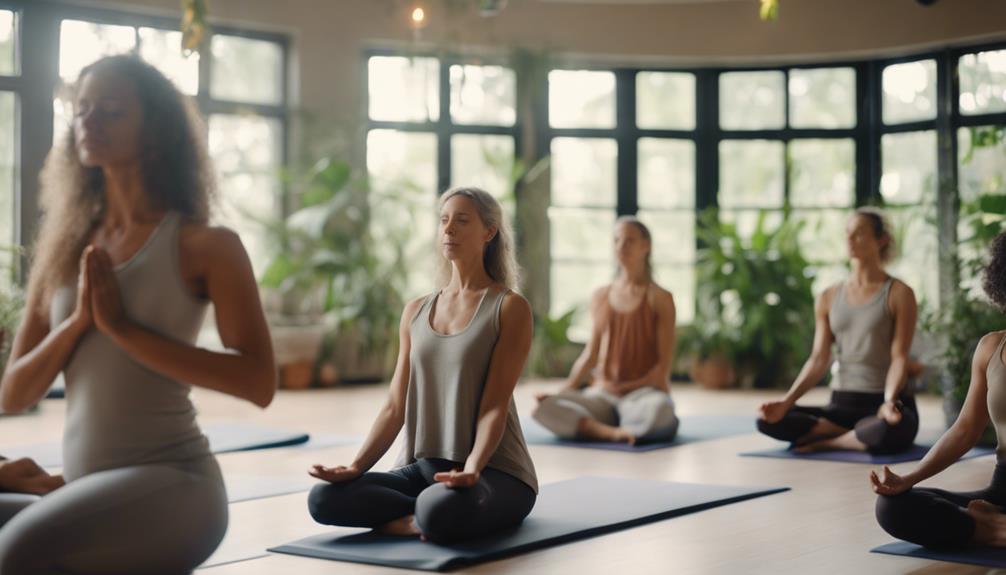
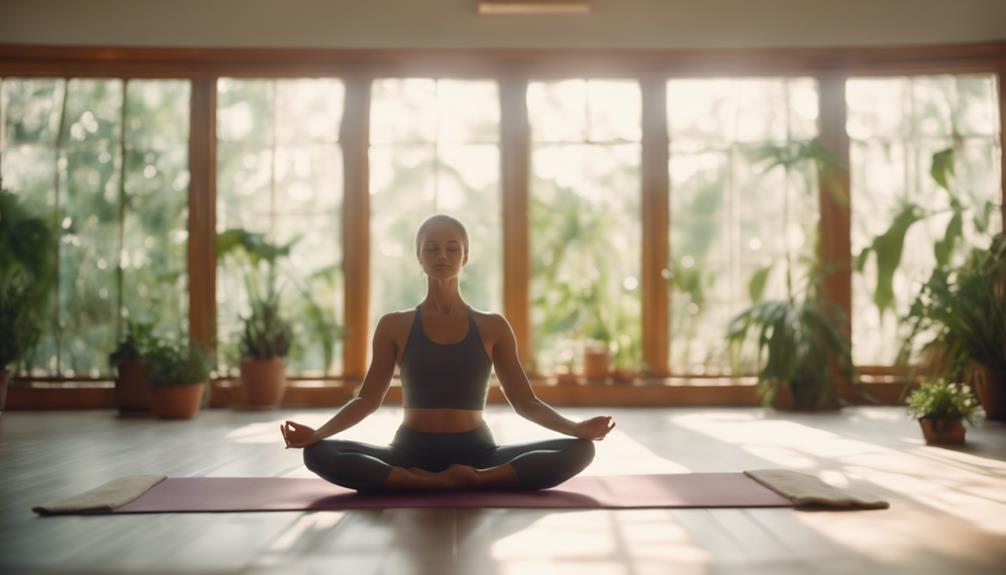
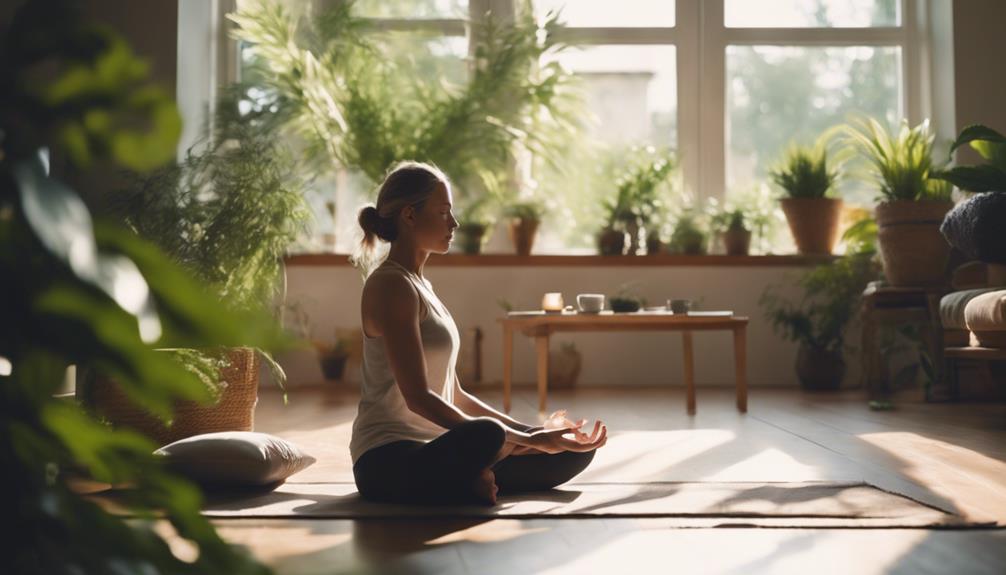
A few minutes of stillness can help you transition from the pace of daily life into your yoga practice. Sit or lie in a comfortable position, keeping your body relaxed and your spine as natural as possible. Close your eyes if that feels comfortable, or soften your gaze.
Bring your attention to the breath and notice what is present. Thoughts, sounds, physical sensations, and emotions may arise. You do not need to push them away or follow every thought. Acknowledge them, then gently guide your attention back to breathing and bodily sensations.
Even one or two minutes can establish a more deliberate beginning. The purpose is not to empty your mind, but to practise noticing when attention has moved and returning with patience.
Pay attention to physical sensations
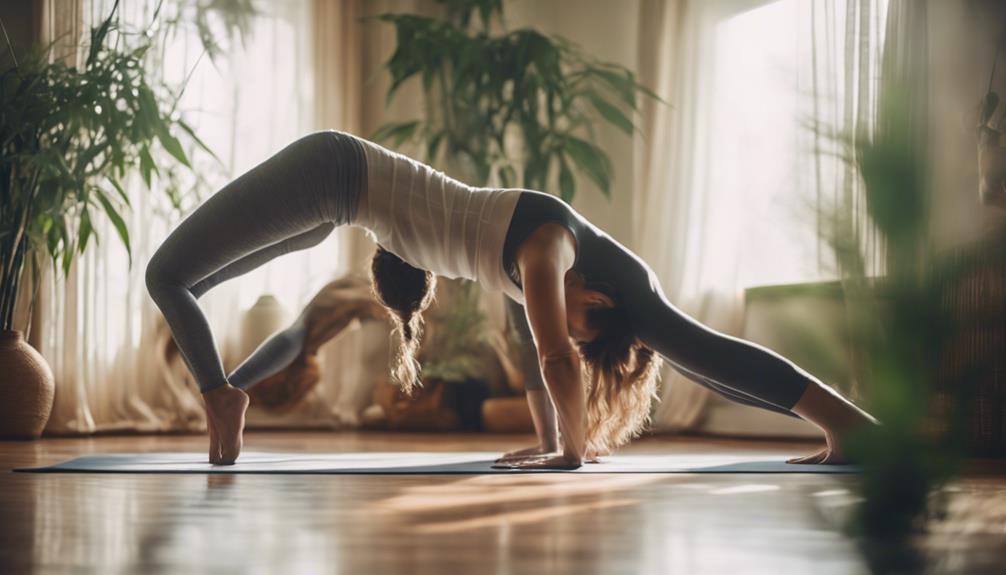
During each posture, explore what you can feel. Notice the contact between your feet and the floor, the lengthening of your spine, the work of your muscles, and the movement of your breath. You might also observe warmth, tightness, trembling, ease, or resistance.
Try to distinguish between a sensation that signals a useful challenge and one that suggests you should stop or adjust. Move gradually, avoid forcing your range of motion, and use a simpler variation whenever necessary. Mindfulness includes listening to your body rather than trying to make it match an ideal shape.
Practise non-judgmental awareness
It is natural to compare yourself with other people, criticise your balance, or become frustrated when a posture feels difficult. When you notice this happening, treat the reaction as another experience to observe. You can silently name it—such as “comparison,” “impatience,” or “tension”—and then return to the breath or the posture.
This approach changes the focus from judging the quality of your practice to understanding your experience. A distracted session can still be mindful if you repeatedly notice the distraction and come back.
End with a deliberate pause
Leave time at the end to slow down. Rest in a comfortable position and notice the effects of the practice on your breathing, muscles, mood, and energy. There is no need to produce a particular result. Simply observe what has changed and what remains present.
Before returning to your day, take one final breath and reconnect with your intention. Carrying this same quality of attention into ordinary activities—walking, eating, working, or listening—can help mindfulness extend beyond the mat.