Yoga can support nervous system health by combining movement, breathing, body awareness, and deliberate rest. It is not a substitute for medical or mental health care, but it can provide a practical way to notice stress earlier and create regular opportunities for recovery. Explore broader yoga benefits to see how nervous-system practices support whole-body wellness.
The most useful approach is not necessarily the most demanding class. A short, comfortable practice that helps you feel steadier may be more supportive than an intense session that leaves you overstimulated. Your ideal routine will depend on your current energy, mobility, health, and reasons for practising.
Understanding stress and recovery
The autonomic nervous system helps regulate functions such as heart rate, breathing, digestion, and alertness. Its sympathetic activity is associated with readiness and action, while parasympathetic activity supports rest and recovery. Both are necessary. The goal of yoga is not to eliminate sympathetic activity, but to improve your ability to move between activation and relaxation when circumstances change.
Yoga may help by directing attention to physical sensations and breathing while you move. This combination can make it easier to recognise muscle tension, shallow breathing, or racing thoughts before they build. Slow, predictable movement and a comfortable pace may also provide a sense of steadiness during stressful periods.
Breathing practices for a calmer state
Breathwork should feel easy rather than forced. A simple starting point is to breathe quietly through the nose, allowing the abdomen and lower ribs to move naturally. After several relaxed breaths, you can make the exhalation slightly longer than the inhalation without straining or holding the breath.
Try this for two to five minutes:
- Sit or lie in a position that feels supported.
- Notice the natural rhythm of your breathing.
- Inhale gently for a comfortable count.
- Exhale for a count that is one or two numbers longer.
- Return to a normal breath if you feel dizzy, tight, anxious, or short of breath.
Alternate-nostril breathing and other structured techniques may suit some people, but they are optional. Breath retention, rapid breathing, or forceful techniques are not appropriate for everyone. If breath-focused practice increases distress, keep your eyes open, shift attention to the room, and return to ordinary breathing.
Yoga poses that support relaxation
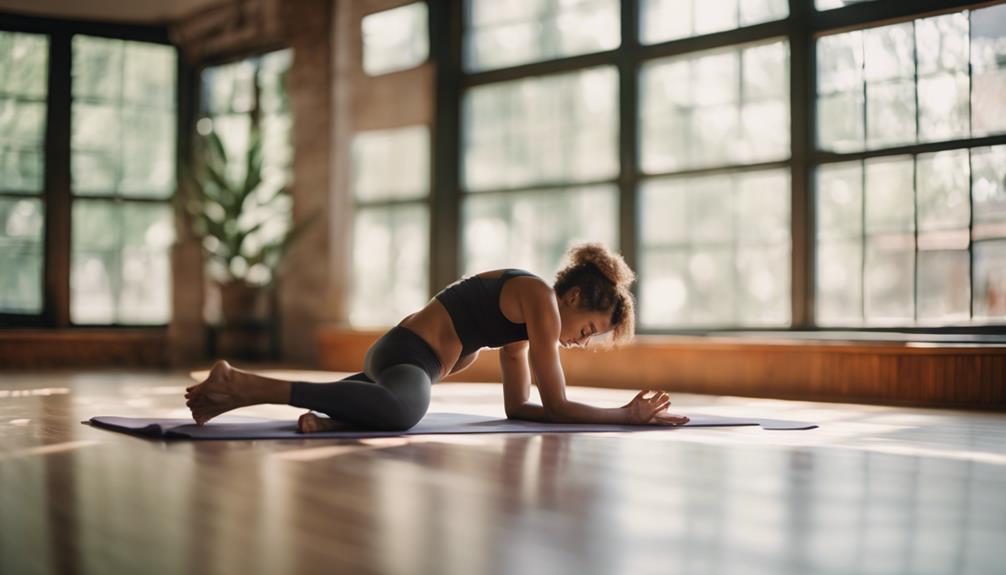
Relaxation-oriented yoga does not require advanced flexibility. Use props, cushions, or a wall so that the body can soften instead of working to maintain a demanding shape. Helpful options include: Gentle movement supporting nervous system health can also provide upper back relief through targeted yoga poses.
- Supported child’s pose: Rest your chest and head on cushions, keeping the knees as wide as is comfortable.
- Constructive rest: Lie on your back with knees bent and feet supported on the floor or a cushion.
- Legs supported on a chair or wall: Elevate the lower legs only if the position feels comfortable and does not create pressure or dizziness.
- Gentle supine twist: Move slowly and keep the range of motion easy, especially around the lower back.
- Brief supported relaxation: Lie down with a blanket under the knees and allow the arms to rest naturally.
Stay in each position for several breaths, but do not treat stillness as a test of endurance. If a pose causes pain, numbness, breath restriction, or a strong emotional reaction, come out of it and choose a simpler position.
A short practice for stressful days
A five- to ten-minute sequence can be enough to interrupt a stressful pattern:
- Spend one minute noticing your breathing and contact with the floor or chair.
- Roll the shoulders and gently move the neck within a pain-free range.
- Practise slow cat-cow movements or another comfortable spinal movement for several rounds.
- Rest in a supported child’s pose or constructive rest for two to three minutes.
- Finish with quiet breathing and notice whether anything has changed.
When you feel restless rather than depleted, a slow standing sequence or a gentle walk may be more useful than lying down. Moving with steady breathing can help discharge some physical tension without adding unnecessary intensity. When you feel exhausted or overwhelmed, choose fewer movements and more support.
Making the practice sustainable
Consistency matters more than duration. You might use two minutes of breathing before work, a few shoulder and spine movements between tasks, or a quiet supported pose before bed. Linking yoga to an existing routine makes it easier to repeat. Keep the practice flexible: a restorative session may be appropriate on one day, while moderate movement may feel better on another.
Safety and personalisation
Yoga should be adapted for injuries, pregnancy, cardiovascular or respiratory conditions, dizziness, chronic pain, and significant anxiety or trauma symptoms. Some people find closed-eye practice, breath retention, inversions, or intense stretching uncomfortable. Stop or modify anything that feels unsafe, and consider guidance from a qualified yoga teacher or healthcare professional who understands your circumstances.
The aim is not to force the nervous system to calm down. It is to practise noticing, responding, and recovering with greater choice. Gentle movement, comfortable breathing, and regular rest can make yoga a useful part of a broader approach to stress management and wellbeing.