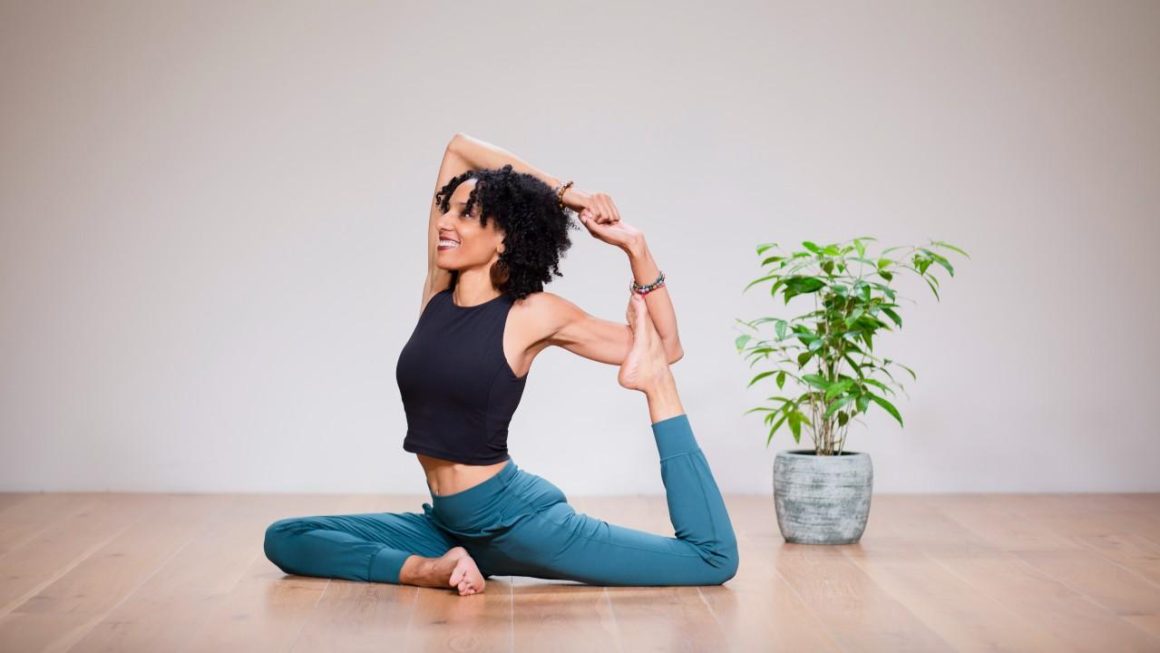
Learning yoga pose names for flexibility can make classes easier to follow and help you communicate clearly with teachers. A posture may be introduced by its Sanskrit name, its English translation, or a descriptive variation based on the class style. Knowing both forms gives you a useful vocabulary without taking attention away from alignment, breathing, and how the pose feels in your body. Learning style-specific pose names can help you choose yoga practices that match your flexibility goals.
Why yoga pose names matter
Pose names are practical reference points. They help you recognize a posture when it appears in a sequence, distinguish between similar positions, and ask for an adjustment or modification when needed. They also provide context: the same general shape may be approached as an active strengthening posture in one class and as a supported, slower position in another.
Names are not completely uniform across yoga traditions. Some teachers use Sanskrit throughout a class, while others prefer English names or combine both. Learning the two versions can make it easier to participate in Hatha, Vinyasa, Ashtanga, Yin, and restorative sessions.
Common flexible yoga poses and their names
The following postures are frequently encountered in classes that include stretching, mobility, or flexibility-focused work:
- Downward-Facing Dog — Adho Mukha Svanasana
- Cobra Pose — Bhujangasana
- Bridge Pose — Setu Bandha Sarvangasana
- Triangle Pose — Trikonasana
- Warrior poses — commonly identified with the Virabhadrasana family
- Seated Forward Bend — Paschimottanasana
- Chair Pose — Utkatasana
- Low Lunge — often called Anjaneyasana
These names are useful starting points, but a name alone does not describe every detail of a posture. Arm position, stance, props, intensity, and the teacher’s instructions can all vary.
How pose names change by yoga style
Hatha yoga
Hatha classes often introduce postures at a deliberate pace, with time to explore alignment and breathing. This makes them a helpful setting for learning foundational names such as Trikonasana, Virabhadrasana, and Paschimottanasana. Repeated practice can connect the spoken name with the posture’s shape and with the alignment instructions that accompany it.
Vinyasa and Ashtanga yoga
Vinyasa and Ashtanga classes generally place greater emphasis on movement, transitions, and breath-linked sequences. Pose names may be called quickly, especially while the class is flowing. In Ashtanga, repeated sequences provide regular exposure to the same terminology. In Vinyasa, a teacher may move between Sanskrit and English, using names such as Utkatasana for Chair Pose or Anjaneyasana for Low Lunge. Learning restorative pose terminology can deepen your understanding of flexible poses while exploring nearby teacher training opportunities.
Reviewing a small group of common names before class can help you anticipate transitions. It is still important to follow the teacher’s movement and alignment cues rather than moving ahead solely because you recognize the next pose.
Yin and restorative yoga
Yin and restorative practices often use longer holds, gentle variations, and props. Teachers may use traditional Sanskrit names, but they may also describe a posture by its shape or by the support being used—for example, a supported forward fold. In these settings, the most useful vocabulary may include both the basic pose name and the modification that makes it comfortable and sustainable.
If a posture aggravates an existing issue, knowing its name and common variations makes it easier to explain your needs and request an alternative. A pose name should support communication, not pressure you to force a particular expression.
One posture, different emphasis
Yoga traditions may give related positions different names or purposes. A lunge in a vigorous Vinyasa class might be cued as Crescent Pose and practiced with an active, strengthening emphasis. A similar basic shape in a Yin class might be called Dragon and held much longer with attention directed toward a slower release. The name and the surrounding instructions help explain how the posture is being used in that particular practice.
Ways to learn pose names safely
- Start with a short list of familiar poses rather than trying to memorize an entire vocabulary at once.
- Learn the Sanskrit and English names together so you can recognize either form in class.
- Practice slowly and connect each name with the posture, breath pattern, and key alignment cues.
- Ask the teacher to repeat or explain an unfamiliar term; clarification can prevent confusion during transitions.
- Learn names for modified or supported versions so you can request appropriate options.
- Use a mirror or instructional video only as a learning aid, and avoid forcing your body to imitate an appearance.
Yoga pose names are tools for understanding and communication. Whether you prefer Hatha’s measured instruction, Vinyasa’s flowing sequences, Ashtanga’s repetition, or the slower approach of Yin and restorative practice, a growing vocabulary can help you participate with greater confidence. Keep the names connected to breath, awareness, and comfortable alignment, and let the needs of your body guide how each posture is practiced.