A consistent yoga practice can help support the muscles around your spine, improve mobility, and release tension linked to prolonged sitting or poor posture. The most useful sequence for back strength combines gentle spinal movement with poses that engage the core, glutes, and hamstrings.
Yoga should feel controlled and comfortable rather than forceful. Move slowly, keep your breathing steady, and stop if a pose causes sharp, worsening, or radiating pain. If you have an existing back injury or a diagnosed spinal condition, ask a qualified healthcare professional whether these movements are appropriate for you.
How Yoga Can Support Back Strength
Back discomfort can be influenced by stiffness, muscle tension, weak supporting muscles, and habits such as sitting for long periods. Yoga may help by combining strengthening and stretching in a mindful practice.
- Core support: Engaging the abdominal and hip muscles can help support the spine during movement.
- Improved mobility: Gentle spinal and hip movements may reduce stiffness and make everyday movement more comfortable.
- Posture awareness: Yoga encourages attention to alignment, which can help you notice habits that place unnecessary strain on the back.
- Reduced tension: Slow breathing and relaxation can help ease stress-related muscle tightness.
Yoga Poses for Strengthening the Back
1. Cat-Cow
Cat-Cow gently mobilises the spine and provides a gradual warm-up before stronger poses.
- Start on your hands and knees, with your hands beneath your shoulders and knees beneath your hips.
- As you inhale, gently lift your chest and tailbone while allowing your spine to curve comfortably.
- As you exhale, draw your abdomen inward and round your spine without forcing your neck.
- Continue slowly for five to ten breaths, moving in time with your breathing.
2. Child’s Pose
Child’s Pose is primarily a restorative position. It can provide a gentle stretch through the back and help release tension between strengthening exercises.
- From hands and knees, move your hips back toward your heels.
- Extend your arms forward or rest them alongside your body.
- Lower your forehead toward the mat, using a cushion or folded blanket if needed.
- Remain for 30 seconds to one minute, breathing comfortably.
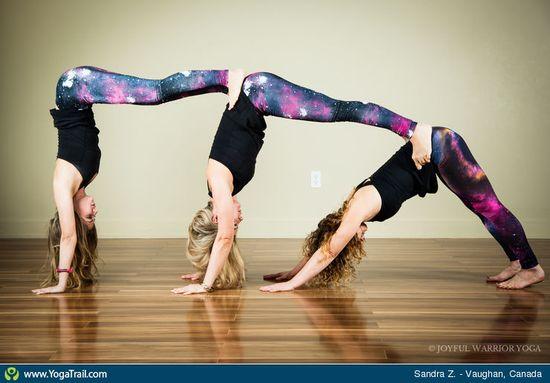
3. Downward-Facing Dog
This pose lengthens the back while also engaging the shoulders, arms, and legs. Focus on creating space through the spine rather than forcing the heels toward the floor.
- Begin on your hands and knees and tuck your toes under.
- Lift your hips up and back, forming an inverted V shape.
- Keep your hands about shoulder-width apart and your feet about hip-width apart.
- Bend your knees slightly if that helps you keep your back long.
- Hold for five to ten breaths.
4. Bridge Pose
Bridge Pose strengthens the glutes and hamstrings while encouraging the muscles around the back and hips to work together.
- Lie on your back with your knees bent and feet flat on the floor.
- Place your feet roughly hip-width apart and keep your arms beside you.
- Press through your feet and lift your hips slowly.
- Keep your knees aligned and avoid pushing the hips higher than you can control.
- Hold for several steady breaths, then lower with control. Repeat as comfortable.
5. Plank Pose
Plank develops core endurance, which is important for supporting the spine during daily activities. Modify the pose by lowering your knees if maintaining a straight line is difficult.
- Start on your hands and knees, then extend your legs back one at a time.
- Keep your hands beneath your shoulders and your body in a straight line.
- Engage your abdomen and glutes without holding your breath or dropping your hips.
- Hold for 15 to 30 seconds to begin, gradually building only while you can maintain good form.
Creating a Simple Practice
Begin with five to ten breaths of Cat-Cow, then move through Downward-Facing Dog, Bridge Pose, and Plank. Use Child’s Pose afterward as a resting position. Practising regularly is more useful than forcing a long session. A gentle routine several times a week can be easier to maintain than occasional strenuous exercise.
Tips for Safer, More Effective Practice
- Warm up with easy movement before holding stronger poses.
- Prioritise alignment and steady breathing over depth or duration.
- Use blocks, cushions, or a folded blanket to make positions more comfortable.
- Keep your movements slow, especially when lifting or lowering the hips.
- Do not practise through sharp pain, numbness, tingling, or pain that travels down an arm or leg.
- Adjust or skip any pose that does not feel suitable for your body.
With patience and consistent practice, these poses can form a balanced routine for improving spinal mobility, building supporting muscle strength, and reducing everyday tension. The goal is not to achieve the deepest version of a pose, but to move with control and leave your back feeling supported rather than strained.