A well-designed yoga flow is more than a collection of poses. It gives the practice a clear direction, prepares the body for increasing challenge, and creates enough space to slow down and notice the effects of movement. Whether you are planning a short home session or teaching a full class, a simple structure can help your sequence feel purposeful without becoming rigid. Explore different yoga styles to choose flow sequences that match your goals, pace, and experience level.
Start with an intention
Before choosing poses, decide what you want the practice to emphasize. Your intention might be physical, such as hip mobility, shoulder opening, balance, or back-body strength. It might also be experiential, such as steadiness, focus, calm, or energy.
Once you have chosen a focus, select movements that support it from beginning to end. A class centered on balance, for example, can include grounding exercises, standing strength, hip stability, and gradually more challenging one-legged poses. A gentle mobility practice may spend more time with spinal movement, easy lunges, supported stretches, and relaxed transitions.
A reliable structure for yoga sequencing
A useful sequence usually moves through several stages. The length of each stage can change depending on the style and the time available.
- Arrival: Begin with comfortable breathing, a quiet pause, or simple movements that help practitioners settle into the practice.
- Warm-up: Use spinal mobility, wrist and shoulder movements, gentle core work, or easy floor-based transitions.
- Preparation: Introduce poses that develop the mobility, strength, and coordination needed for the main focus.
- Peak or central sequence: Explore the most demanding pose, transition, or movement pattern while offering accessible alternatives.
- Cool-down: Reduce intensity with slower stretches, seated movements, gentle twists, or supported poses.
- Rest: End with a period of stillness so the practice has a clear and unhurried conclusion.
This framework works for a dynamic vinyasa class as well as a slower beginner session. The difference is usually the pace, complexity, and amount of time spent in each pose.
Ideas for a gentle beginner flow
A beginner-friendly sequence should make transitions easy to understand and give practitioners time to explore alignment. Start close to the floor with breath awareness, cat-cow movements, child’s pose, or a comfortable seated position. Continue with simple lunges, standing folds, and basic standing poses such as mountain pose, warrior variations, and a supported balance.
After standing work, return to the floor for gentle hamstring stretches, a relaxed twist, or a supported forward fold. Keep the number of poses manageable rather than trying to cover every category in one session. Clear instructions, slower transitions, and permission to use props can make the sequence more approachable for people who are new to yoga.
Building a vinyasa sequence
Vinyasa sequencing often links movement with breath, but a continuous pace does not require every transition to be fast. Begin with a familiar warm-up pattern, then repeat it with small changes as the body becomes prepared for the class focus.
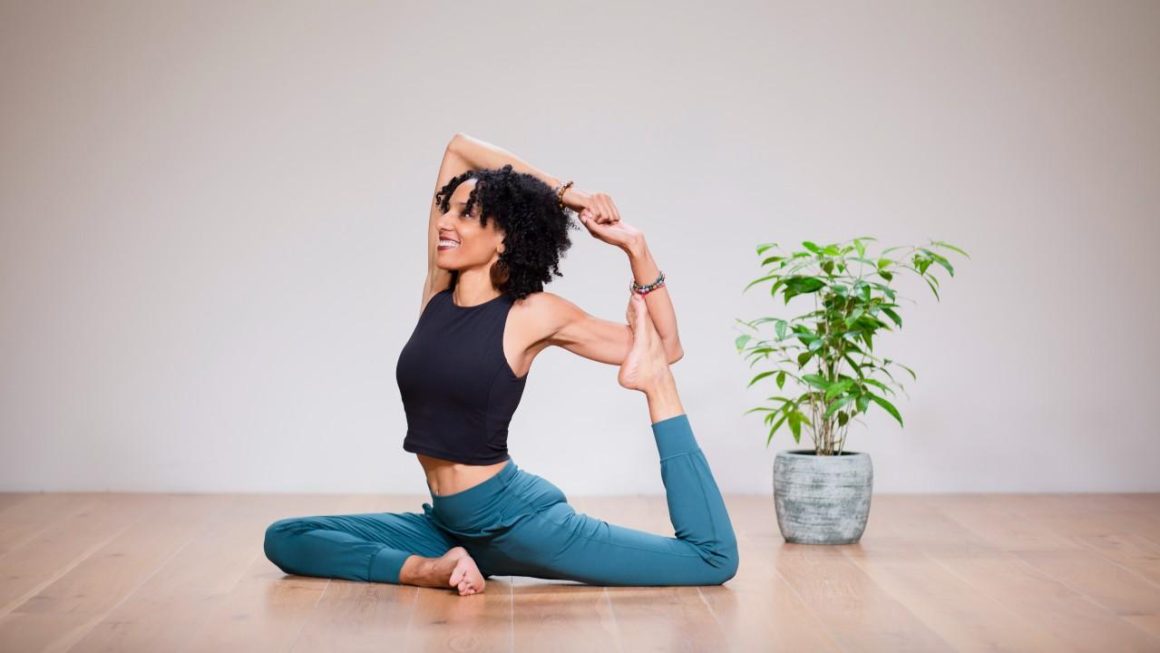
For a standing sequence, you might move from a lunge into warrior poses, a balancing variation, and a controlled return to the floor. For an arm-balance emphasis, include shoulder preparation, wrist awareness, core engagement, and poses that let students practice shifting weight gradually. If the focus is backbending, prepare with spinal extension, leg strength, shoulder mobility, and movements that encourage a stable foundation. Explore Washington yoga studios for guided flow classes that complement these sequence ideas.
Repetition can make a flow easier to follow. Introduce a transition slowly, repeat it with breath-led movement, and then offer an optional variation. This creates progression without making the class feel unpredictable.
Use creative themes without forcing them
Creative sequencing can come from more than unusual pose combinations. You can organize a practice around a movement quality, a body area, or a rhythm. For example, alternate active standing flows with brief grounding pauses, or return to one familiar pose throughout the class to help practitioners notice changes in balance and awareness.
A theme should support the experience rather than distract from it. Simple breath cues, consistent imagery, or a repeated movement pattern are often enough to give a class a sense of unity.
Adapt the sequence to the people practising
A sequence that works well for one group may not suit another. For mixed-level classes, demonstrate a basic option first and then add progressions for those who want more challenge. In a slower or therapeutic-style session, reduce the number of transitions and allow more time for individual adjustment.
Consider how practitioners will enter and leave each pose, not just how the pose looks when completed. Offer alternatives for balance, range of motion, and intensity. Props, a shorter hold, or a return to a familiar variation can help people remain engaged without feeling pressured to match a fixed shape.
Review and refine your yoga flow
After practising or teaching a sequence, review its overall rhythm. Did the warm-up prepare the main focus? Were any transitions unnecessarily complicated? Did the practice include enough recovery after demanding movements? Was the closing section long enough to change the pace?
Write down the sequence in broad sections rather than scripting every second. This leaves room to respond to the group, adjust the timing, and replace a pose when it does not serve the intention. With regular experimentation, you can build a dependable collection of yoga flow sequence ideas while keeping each practice responsive and personal.