Yoga may help some people manage back discomfort by combining gentle mobility, stretching, strengthening, and focused breathing. The most useful approach is not to force the spine into deep positions, but to move gradually and build support around the hips, core, and back. These back-friendly poses also support broader health benefits, making yoga a valuable part of a balanced wellness routine.
This routine is intended for mild stiffness or uncomplicated back discomfort. Back pain has many possible causes, so a pose that feels helpful for one person may aggravate another. Move slowly, stay within a comfortable range, and stop if symptoms become sharp, intense, or begin to travel into the legs.
How yoga may help back pain
Limited hip or hamstring mobility can sometimes make the lower back work harder during everyday movement. Gentle yoga can improve movement through these surrounding areas while strengthening muscles that help support the spine. Slow breathing may also reduce tension and the tendency to brace against movement.
A balanced practice usually includes three elements:
- Mobility: controlled movement through the spine, hips, and pelvis.
- Strength: gradual work for the glutes, deep core, and back muscles.
- Relaxation: breathing and supported positions that reduce unnecessary muscle guarding.
Gentle yoga poses for lower back pain
Cat-Cow
Start on your hands and knees, with your hands beneath your shoulders and knees beneath your hips. Slowly round your back as you exhale, then move toward a comfortable lengthened position as you inhale. Keep the motion smooth and small rather than forcing either end of the range.
This movement can warm the spine and reduce the feeling of stiffness. If kneeling is uncomfortable, perform a similar pelvic-tilting motion while lying on your back.
Child’s Pose
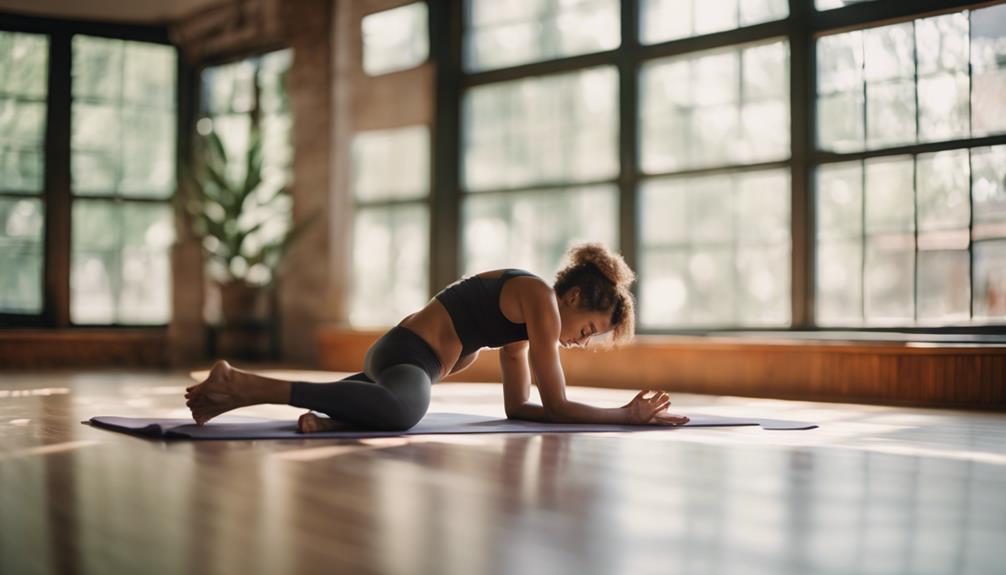
From hands and knees, sit your hips back toward your heels and reach your arms forward, or rest them alongside your body. Place a folded blanket or bolster beneath your chest if reaching the floor feels difficult. Keep the position comfortable and avoid pulling the lower back into a deep stretch.
Supine Knee-to-Chest Stretch
Lie on your back with both knees bent. Bring one knee gently toward your chest while keeping the other foot on the floor, then switch sides. You may also hold both knees lightly if that feels comfortable. Keep your shoulders relaxed and avoid rocking or tugging.
Supported Bridge Pose
Lie on your back with your knees bent and feet planted. Press gently through your feet to lift your hips a small amount, keeping the movement controlled. Lower slowly. If you are comfortable with the pose, repeat several times; if not, practise a gentle abdominal brace and pelvic tilt instead. These gentle tension release poses can also ease stiffness and support a calmer, more comfortable back.
Bridge can help develop strength in the glutes and the muscles along the back of the body. It should not create pinching or compression in the lower back.
Bird Dog
From hands and knees, extend one leg behind you while keeping the pelvis steady. When that feels stable, add the opposite arm. Hold briefly, return with control, and change sides. The goal is a steady spine, not a high leg or a deep backbend.
Gentle Supine Twist
Lie on your back with your knees bent. Allow both knees to move slightly to one side while keeping the movement easy, then return to the centre and switch sides. Use a cushion under the knees if needed. Do not force the twist or lift a shoulder aggressively from the floor.
A simple beginner sequence
Begin with a few slow breaths while lying comfortably or sitting supported. Continue with several gentle Cat-Cow movements, followed by Child’s Pose if it feels appropriate. Perform knee-to-chest stretches, then add supported Bridge or Bird Dog. Finish with a comfortable supine position and relaxed breathing.
Keep early sessions short and focus on consistency rather than intensity. You can use blankets, blocks, or bolsters to make positions more supported. Mild stretching or muscular effort may be acceptable, but pain should not steadily increase during the practice or remain worse afterward.
Precautions and when to seek advice
Deep forward bends, strong twists, and intense backbends may not suit every type of back pain. People with a recent injury, sciatica, known disc problems, osteoporosis, or persistent symptoms should ask a healthcare professional for individual guidance before beginning a new routine. A qualified yoga teacher with experience in therapeutic adaptations can also help modify poses.
Seek prompt medical attention for back pain accompanied by significant weakness, numbness, loss of bladder or bowel control, fever, unexplained weight loss, or pain following serious trauma. Stop exercising and seek advice if symptoms radiate, become severe, or repeatedly worsen.
Building lasting back strength
Yoga is one part of a broader approach to back care. Regular walking, sensible strength training, comfortable work positions, and frequent changes of posture may also support recovery. Over time, combine gentle spinal mobility with progressive work for the glutes, core, and back rather than relying only on stretching. The best routine is one you can perform comfortably, consistently, and with attention to how your body responds.