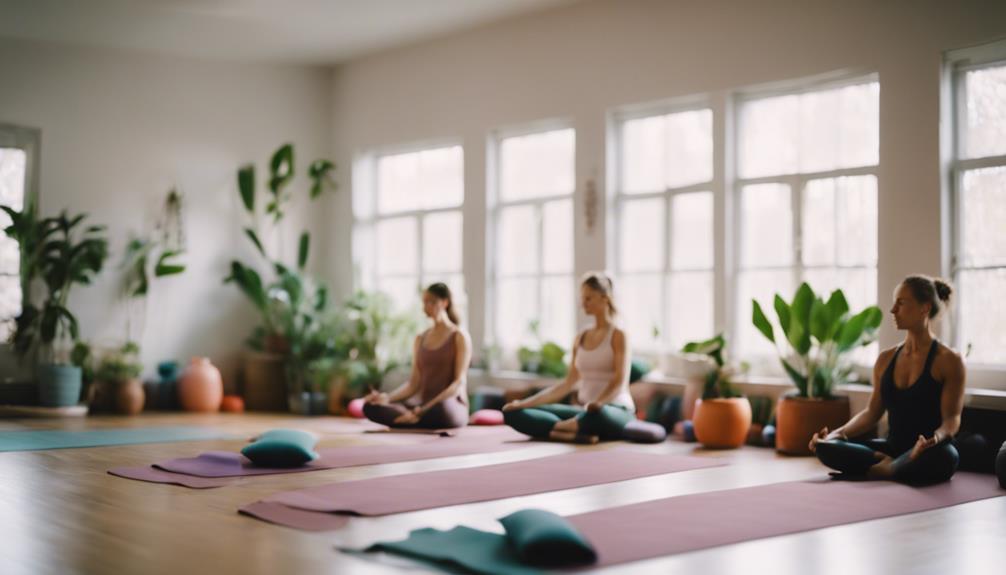
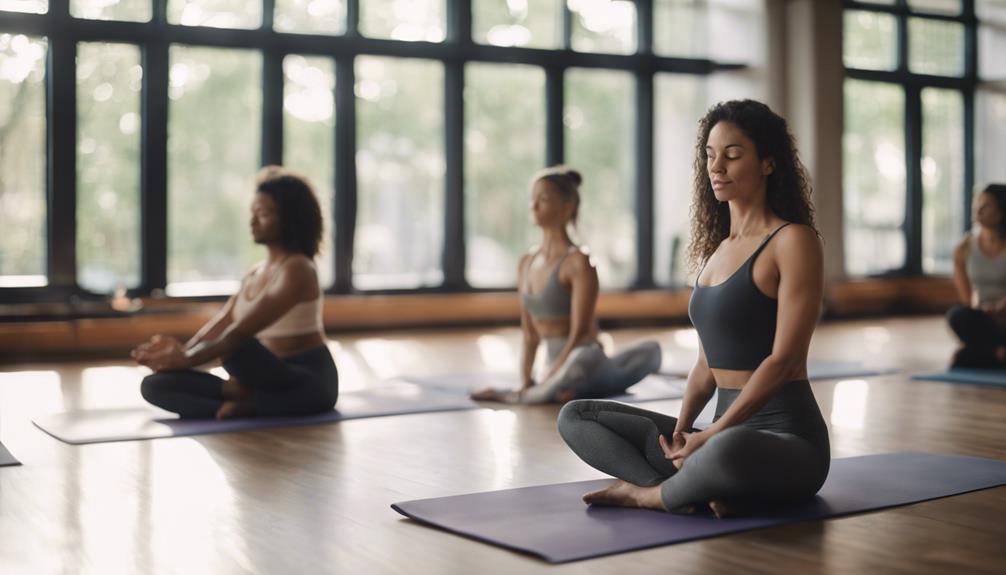
A busy mind, tight muscles, or the stress of the day can make it difficult to fall asleep. A gentle yoga practice before bed may help create a calmer transition from activity to rest. Rather than aiming for an intense workout or perfect flexibility, bedtime yoga focuses on slow movement, comfortable stretches, steady breathing, and relaxation. Exploring broader yoga benefits can show how sleep-focused practices support overall physical and mental wellness.
You can practise on a mat, beside your bed, or use a few simple movements on the bed itself. The most useful routine is one you can repeat comfortably and consistently.
How yoga may support better sleep
Slow yoga gives you an opportunity to reduce physical and mental stimulation before bedtime. Gentle movement can ease areas that commonly hold tension, including the shoulders, hips, lower back, and neck. Coordinating movement with unhurried breathing can also give your attention something simple to focus on when thoughts begin to race.
Yoga should not be viewed as a guaranteed cure for insomnia, but a calming evening practice can be one helpful part of a broader sleep routine. If poor sleep is persistent, severe, or affecting your daily life, speak with a healthcare professional rather than relying on yoga alone.
Guidelines for a calming bedtime practice
A bedtime session does not need to be long. Ten to 20 minutes is enough to establish a relaxing ritual, and even a few quiet movements may be useful on busy evenings. Keep the intensity low and allow your breathing to remain smooth.
- Practise when you have finished demanding tasks for the evening, often 30 to 90 minutes before bed.
- Choose comfortable clothing and dim the lights if possible.
- Move slowly, without forcing a stretch or trying to achieve a particular shape.
- Use cushions, folded blankets, or a wall for support.
- Skip vigorous flows, strong backbends, challenging inversions, and stimulating breathwork close to bedtime.
- Stop if you feel pain, dizziness, numbness, or unusual shortness of breath.
Gentle yoga poses for sleep
Child’s pose
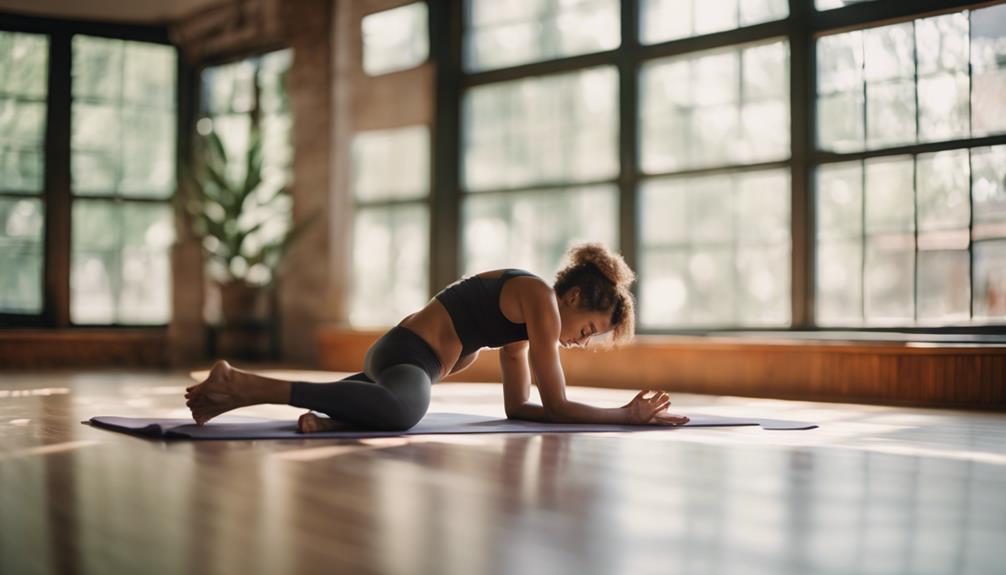
Kneel and sit your hips toward your heels, then fold forward as far as feels comfortable. Rest your forehead on a cushion if needed. Keep your arms relaxed and take several slow breaths. Widening the knees can make the pose more comfortable for the hips and abdomen.
Legs supported by a wall or bed
Lie on your back with your lower legs resting on a wall, the side of the bed, or a chair. This supported position allows the legs and feet to relax without requiring effort. Stay for a few minutes, keeping the knees soft rather than locked. After practicing calming poses for sleep, explore beginner-friendly weight-loss asanas to build a consistent yoga routine.
Knees to chest
Lie on your back and gently draw one knee, or both knees, toward your chest. Hold behind the thighs instead of pulling on the knees. This can provide a comfortable stretch for the lower back. Rocking slightly from side to side is optional, but remain gentle.
Reclined spinal twist
With your back on the floor or bed, bend your knees and let them lower to one side. Keep the movement small and allow both shoulders to remain as relaxed as possible. Return to centre, then repeat on the other side. A pillow between the knees can provide extra support.
Supported relaxation
Finish by lying comfortably on your back or side. Place a pillow under your knees or between them and let your hands rest easily. Notice the contact between your body and the surface beneath you. There is no need to control every thought; simply return attention to a slow, quiet exhalation whenever your mind wanders.
A simple 15-minute bedtime yoga routine
This sequence can be performed on a mat or a firm bed. Adjust or omit any movement that does not feel comfortable.
- Settling breath — 2 minutes: Sit or lie down and breathe naturally. Gradually make the exhalation a little longer than the inhalation, without straining.
- Neck and shoulder release — 2 minutes: Slowly turn the head from side to side, then circle the shoulders in both directions. Keep the range of motion easy.
- Child’s pose — 2 minutes: Support the head and chest with cushions if necessary.
- Knees to chest — 2 minutes: Hold the position for several breaths, releasing the legs if the lower back feels uncomfortable.
- Reclined twist — 3 minutes: Spend a few breaths on each side, moving slowly between sides.
- Supported legs-up position — 2 minutes: Rest the legs on a wall, chair, or bed.
- Final relaxation — 2 minutes: Lie still and soften the jaw, shoulders, hands, abdomen, and legs.
Making yoga part of your sleep routine
Consistency is usually more practical than occasional long sessions. Try practising at roughly the same point in your evening and observe which movements help you feel settled. On some nights, breathing and relaxation may be enough; on others, you may prefer several gentle stretches.
Yoga works best alongside other supportive sleep habits, such as keeping the bedroom quiet and comfortable, reducing stimulating activities before bed, and allowing enough time for rest. If a pose feels effortful or leaves you more alert, replace it with a supported position or end with quiet breathing. The goal is not to complete a demanding sequence but to give your body and mind a clear, calm signal that the day is winding down.