Gentle movement can be a useful way to manage stiffness and tension in the lower back, especially when discomfort is linked to prolonged sitting, limited mobility, or a minor strain. A balanced routine should not focus on the lumbar spine alone. The hips, pelvis, hamstrings, and upper back can all influence how the lower back moves. For lasting relief, explore yoga’s broader health benefits through gentle movements that support flexibility, strength, and lower-back comfort.
Stretching should feel mild and controlled—not sharp, forceful, or painful. If a movement makes your symptoms worse, stop and try a smaller range of motion or seek advice from a qualified healthcare professional.
Before you begin
Start with a few minutes of easy walking or gentle movement so your body is not going directly from rest into a deep stretch. Move slowly, breathe normally, and avoid bouncing. You may hold a comfortable position for around 20 to 30 seconds, but there is no need to force a specific duration.
Perform the following exercises on a firm, comfortable surface. Use a folded towel or cushion for support when needed.
Gentle stretches for the lower back
Single knee-to-chest stretch
Lie on your back with both knees bent and your feet supported. Bring one knee toward your chest and hold behind the thigh or at the shin. Keep the other leg relaxed, either bent or extended if that feels comfortable. Hold gently, then return to the starting position and switch sides. This movement can reduce the feeling of tension around the lower back and hips without requiring a large spinal movement.
Pelvic tilts
Remain on your back with your knees bent. Gently tighten your abdominal muscles and tilt your pelvis so that your lower back moves slightly toward the floor. Release and return to a neutral position. Repeat slowly several times. Pelvic tilts combine gentle mobility with awareness of how the pelvis and lower back move together.
Cat-cow movement
Begin on your hands and knees, with your hands below your shoulders and your knees below your hips. Slowly round your back, then gradually move toward a comfortable extension without forcing your neck or lower back. Continue at an easy pace and coordinate the movement with your breathing. The goal is smooth spinal motion rather than reaching an extreme position.
Child’s pose variation
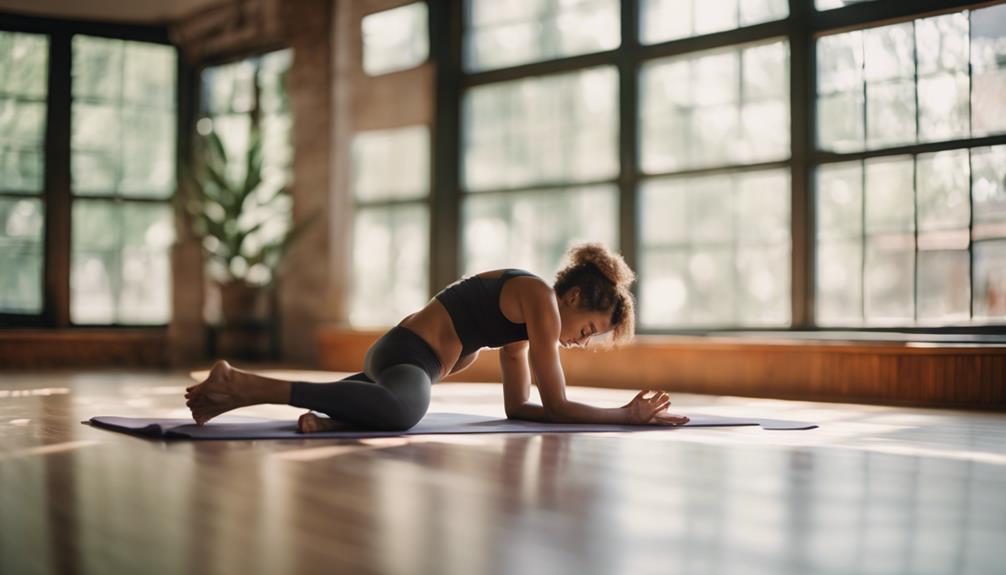
From hands and knees, move your hips back toward your heels while extending your arms forward. If this position feels uncomfortable, keep your hips higher or place a cushion beneath them. Relax your shoulders and breathe steadily. This pose can provide a gentle lengthening sensation through the back, hips, and sides of the body. Alongside these stretches, gentle yoga practices may support nervous system health while easing tension throughout the body.
Hip stretches that may ease back tension
Supine figure-four stretch
Lie on your back with both knees bent. Place one ankle over the opposite thigh, forming a figure-four shape. If comfortable, draw the supporting thigh toward you while keeping your head and shoulders relaxed. You should feel the stretch mainly around the outer hip and buttock. Switch sides after holding gently.
Kneeling hip-flexor stretch
Kneel with one foot in front of you. Keep your torso upright and shift your weight forward slightly while maintaining a comfortable pelvic position. Avoid arching your lower back to create a deeper stretch. The sensation should be at the front of the hip on the kneeling side. Use a chair or wall for balance if necessary.
Gentle hamstring stretch
Lie on your back and raise one leg, holding behind the thigh. Keep the knee slightly bent rather than locking it straight. Slowly extend the leg only until you feel a mild stretch behind the thigh. A strap can provide support, but do not pull the leg aggressively.
How to build a simple routine
Choose three or four movements that feel comfortable rather than trying to complete every exercise at once. A short routine might include pelvic tilts, cat-cow movement, a single knee-to-chest stretch, and one hip stretch. Practice consistently and use gentle walking or other comfortable activity between stretching sessions.
If you sit for long periods, stand up and move around regularly instead of waiting until your back becomes stiff. Stretching may be more helpful when paired with gradual strengthening of the abdominal, hip, and glute muscles, since mobility and support both contribute to comfortable movement.
When to get medical advice
Stop exercising and seek prompt medical guidance if back pain is accompanied by numbness, tingling, significant weakness, loss of bladder or bowel control, or pain following a serious injury. Professional assessment is also appropriate when symptoms are severe, persistent, repeatedly returning, or spreading down a leg. A physical therapist or other qualified clinician can adapt exercises to your symptoms, mobility, and medical history.
The best lower-back stretching routine is one that feels controlled, repeatable, and appropriate for your body. Progress gradually, avoid forcing painful positions, and treat stretching as one part of a broader approach to comfortable movement.