Tension often builds quietly. A busy day, prolonged sitting, shallow breathing, and mental stress can leave the neck and shoulders tight, the jaw clenched, and the body feeling tired but unable to fully relax. A gentle yoga practice can help interrupt that pattern by combining mindful movement, steady breathing, and focused attention. Explore broader health benefits to see how yoga supports tension relief alongside overall physical and mental wellness.
You do not need an advanced practice or a long session to begin. The goal is not to force flexibility. Instead, use comfortable movements to create space, notice where you are holding tension, and give your breathing a chance to become slower and more natural.
How yoga may ease physical and mental tension
Stress can encourage guarded postures, such as rounded shoulders, a shortened neck, or a rigid upper back. Staying in these positions for long periods may contribute to muscle tightness, headaches, restricted movement, and general discomfort. Gentle yoga helps address these habits through slow mobility exercises and stretches that encourage the spine, shoulders, hips, and chest to move more freely.
Breathing and attention are equally important. Focusing on the sensations of movement can draw attention away from stressful thoughts, while a calm, even breath may help the body shift away from a heightened state of alertness. With regular practice, these techniques can become useful tools for responding to everyday stress.
A gentle sequence for releasing tension
Try the following sequence for 10 to 15 minutes. Move slowly, breathe comfortably, and stop or modify any exercise that causes pain.
- Cat-cow: Begin on your hands and knees, with your hands beneath your shoulders and knees beneath your hips. As you inhale, gently lengthen the spine and lift the chest. As you exhale, round the back without forcing the movement. Continue for several slow cycles.
- Child’s pose: Lower your hips toward your heels and rest your forehead on a cushion if needed. Let your arms extend forward or rest alongside your body. Stay for several breaths, allowing the back and shoulders to soften.
- Seated forward fold: Sit comfortably with your legs relaxed rather than rigid. Hinge forward only as far as feels easy, resting your hands on your legs or a cushion. Keep the neck loose and avoid pulling yourself deeper into the stretch.
- Supported bridge: Lie on your back with your knees bent and feet on the floor. Lift the hips gently, then lower them, or place a firm cushion beneath the pelvis for a supported version. Keep the breath smooth and release the pose if your lower back feels strained.
- Chest and shoulder opener: While standing or sitting, draw the shoulders gently back and down. You may interlace your fingers behind you if that is comfortable, but do not force the arms straight. Keep the ribs relaxed rather than arching the lower back.
For neck and jaw tension, make small, slow movements instead of large neck circles. Turn your head gently from side to side, then return to center. Let the lips part slightly, relax the tongue, and notice whether you are clenching your teeth.
Use breathing to deepen relaxation
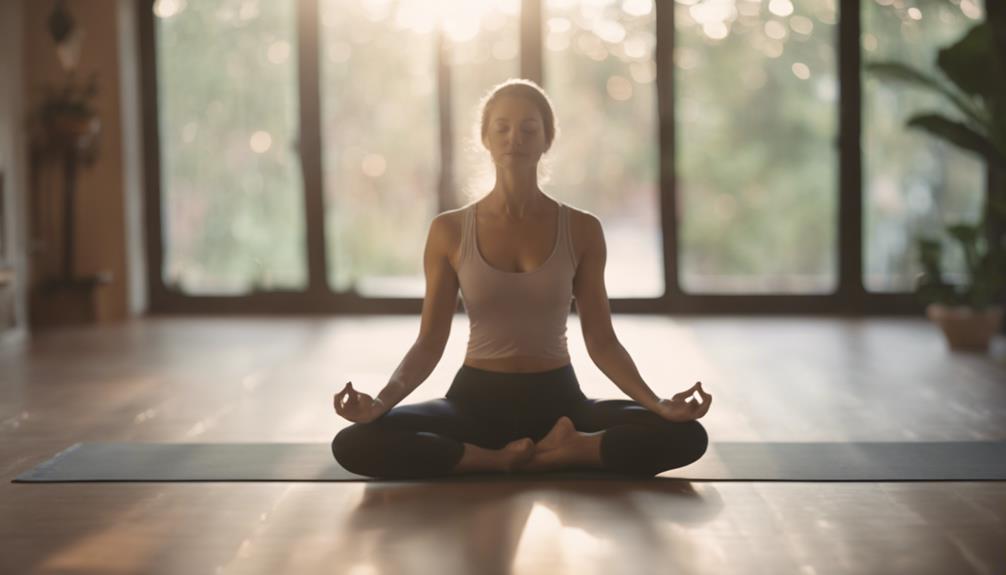
Finish your movement practice with a few minutes of diaphragmatic breathing. Sit or lie in a comfortable position and place one hand on the abdomen. Breathe in gently through the nose if that feels natural, allowing the abdomen to expand without forcing it. Then breathe out slowly and completely. For complementary relief, explore lower back stretches that gently ease strain after tension-focused yoga sessions.
You can try an inhale for a count of four and an exhale for a count of five. The exact numbers are not important; comfort is more important than precision. If counting makes you tense, simply aim for a quiet, steady rhythm. A short body scan can follow: notice the forehead, jaw, shoulders, chest, abdomen, and legs, and invite each area to soften without demanding that every sensation disappear.
Build a practice you can maintain
Consistency is generally more useful than intensity for tension relief. A realistic home routine might include:
- Two or three minutes of gentle spinal and shoulder movements
- Several comfortable poses for areas that commonly feel tight
- Two to five minutes of slow breathing or quiet body awareness
Practice three to five times a week, or use a shorter version on demanding days. A cushion, blanket, or other support can make it easier to relax into a position. Notice how your body responds over time and adjust the sequence rather than pushing through discomfort.
Bring tension relief into the day
Yoga does not have to happen only on a mat. Before a phone call, meeting, or difficult task, pause for three slow breaths. Between periods of sitting, lower the shoulders, unclench the jaw, and take a brief walking break. Gentle arm swings and attention to your posture can help prevent tension from accumulating.
Approach the practice with patience and curiosity. Yoga for tension relief works best as a collection of small, repeatable habits: move with control, breathe without strain, and give your body regular opportunities to leave a guarded posture. If a movement causes sharp pain or symptoms that concern you, stop and seek appropriate professional guidance.